
 ChatGPT
 Perplexity

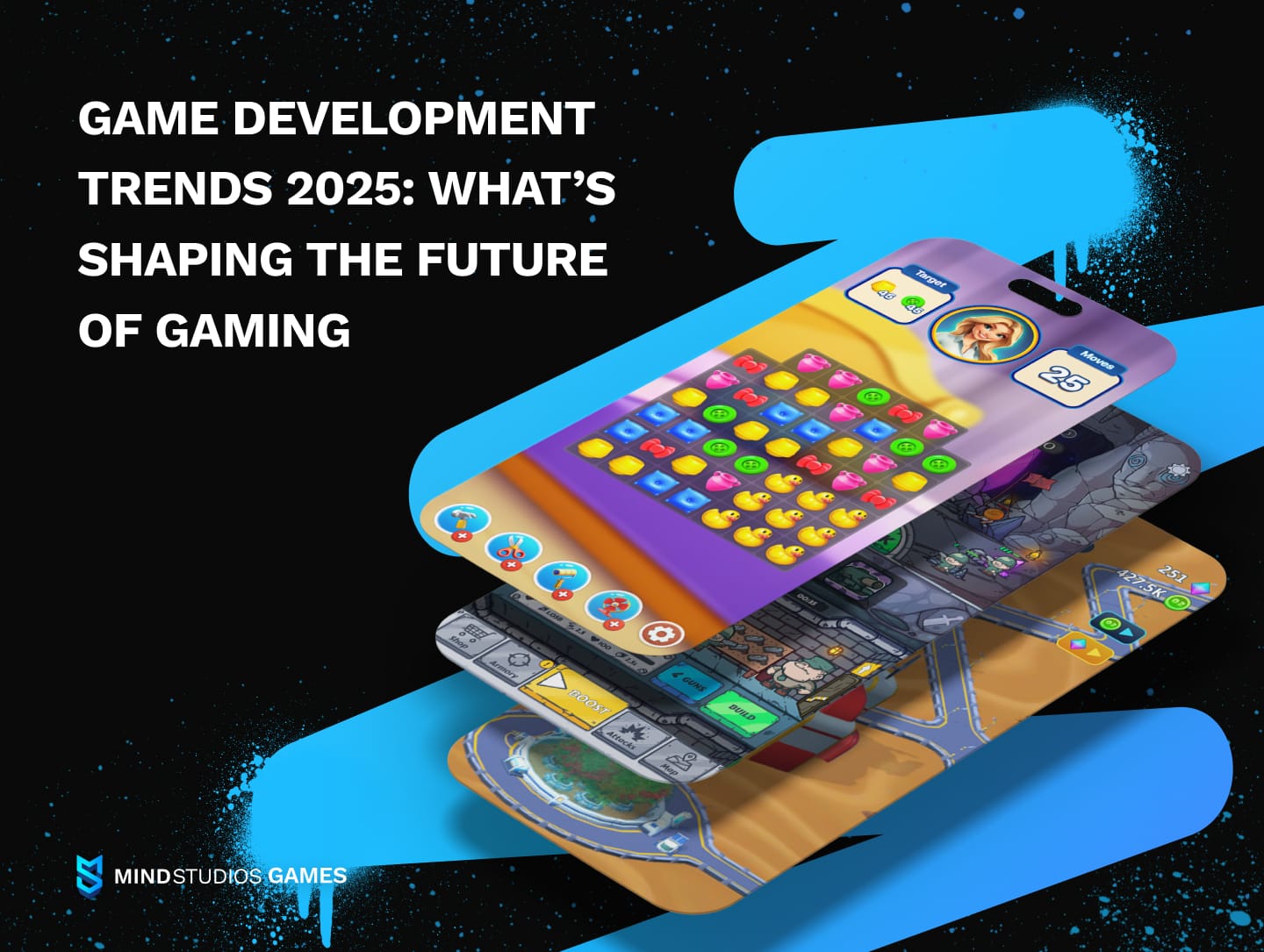
With half a year already behind us, let’s analyze the game development trends at the top of everyone’s mind, recognize the challenges, and think how to make the best of it all.
Highlights:
- AI is among the most visible game development trends this year, but it’s not the only one;
- We’re seeing big steps in game diversification, genre mixing, and use of latest tech;
- Ethics enter game development trends 2025 with more dilemmas than ever before.
The gaming industry is one of the most dynamic and rapidly evolving sectors in entertainment, driven by technological innovations and constantly shifting player expectations. Between 2020 and 2024, we witnessed some big changes — from the rise of cloud gaming and the expansion of immersive virtual and augmented reality experiences to the increasing importance of AI-driven content and more inclusive storytelling. Staying on top of game development trends in this fast-paced environment is crucial for developers, publishers, and enthusiasts alike, as the landscape evolves at an unprecedented pace.
As we’re midway through 2025, we’d like to explore the key gaming industry trends shaping the year. Join us as we dive into the innovations redefining gaming in 2025 and beyond. And if you’re looking for a partner with both experience and passion for games and who follows the trends religiously — look no further, get in touch with Mind Studios Games. We’re confident that whatever you come to us with, game development-wise — we can help deliver 😎
Top 9 technology trends in game development 2025
So what’s driving the trends in the gaming industry at the moment? Let’s take a look.
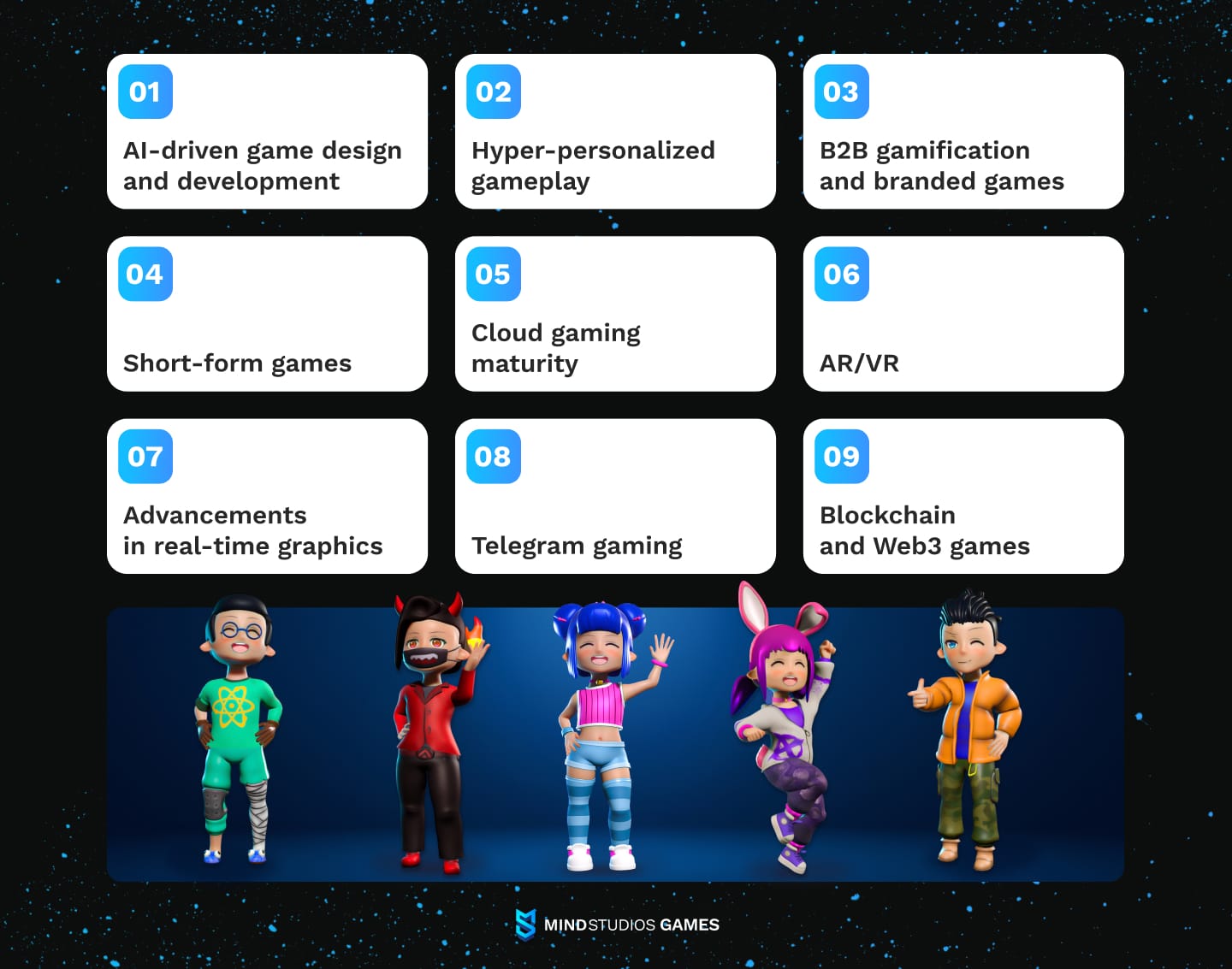
#1 AI-driven game design and development
AI has penetrated many industries already. An industry like game development, that’s always been at the forefront of tech trends, is, of course, one of those. Today, game developers use AI to do various things, which brought it to be one of the trends in gaming.
AI can collect and analyze data — fast
This is what AI does best, as it’s what it was initially designed to do — collect huge amounts of data and analyze it at a speed and with precision unattainable to humans. This is how AI is used in healthcare, finance, and other industries, including even military strategy.
Data analysis is extremely important for game developers and owners: it helps us understand our players and create games that will catch and, what’s even more important, hold their attention.
Algorithms can check and help write code
Machines don’t make simple mistakes. An algorithm will never miss that semicolon at the end of the line of code — an issue that’s happened to every programmer, most likely multiple times. Any work where tiny details like that matter requires multiple checks, peer review, and testing. Entrusting it to an AI trained on the specific type of code you need will make the development faster and error-free.
Then there’s also the newly-emerged approach called vibe-coding, where you can describe in detail what kind of software you want, and AI algorithms generate the necessary code. Of course, it will still need extensive checks by human professionals, but it does make coding accessible to more people.
GenAI speeds up artists’ work
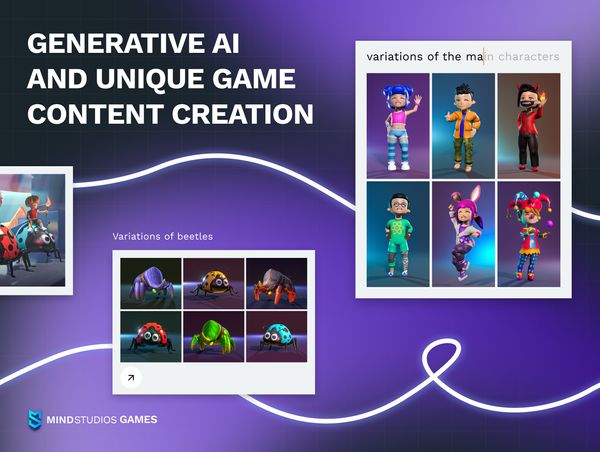
Generative AI, while a topic of much debate, can be used responsibly and fairly. By training models on your own artists’ styles, you can free their time from doing repetitive or mundane parts of work. In that time, and with freed up energy and vigor, they can invest themselves into the creative process and produce art that will take your players’ breath away.
Procedural content generation helps game designers create infinite levels
Game and level designers spend a lot of time and brain power to create games with an infinite number of levels — like hyper-casual games, for example, or hybrid-casual titles like match-3 games, which brought AI in games to the top mobile game development trends. But even in story-driven games with a set ending, creating multiple terrains, clearing rules, and engaging environments is tough work.
It is certainly possible to do create a highly personalized and engaging game without AI — by involving numerous game designers and creating an intricate decision tree for your game. But it will be time-consuming and require a very substantial investment, which isn’t something even some AAA game companies can afford, let alone indie game developers.
— Ivan Dyshuk, Head of Mind Studios Games
AI can generate levels, maps, textures, quests, and other content, allowing for vast, varied, and replayable game environments without extensive manual effort. It can also help design more realistic NPCs that behave naturally; simulate hive behavior in crowds, and enhance gameplay in other ways.
#2 Hyper-personalized gameplay
This is one of those game development trends that are at least partially a result of increased use of AI, but ultimately, it’s not something that needs AI. It’s also not a gaming-exclusive trend: people are increasingly demanding personalization of everything.
Hyper-personalized gameplay is a gaming experience that is highly tailored to individual players’ preferences, behaviors, and skill levels. Think dynamically adapting certain aspects of the game (e.g., storylines, challenges, difficulty, character interactions) based on real-time data about the player.
What does hyper-personalized gameplay bring to the game development industry? A lot of things.
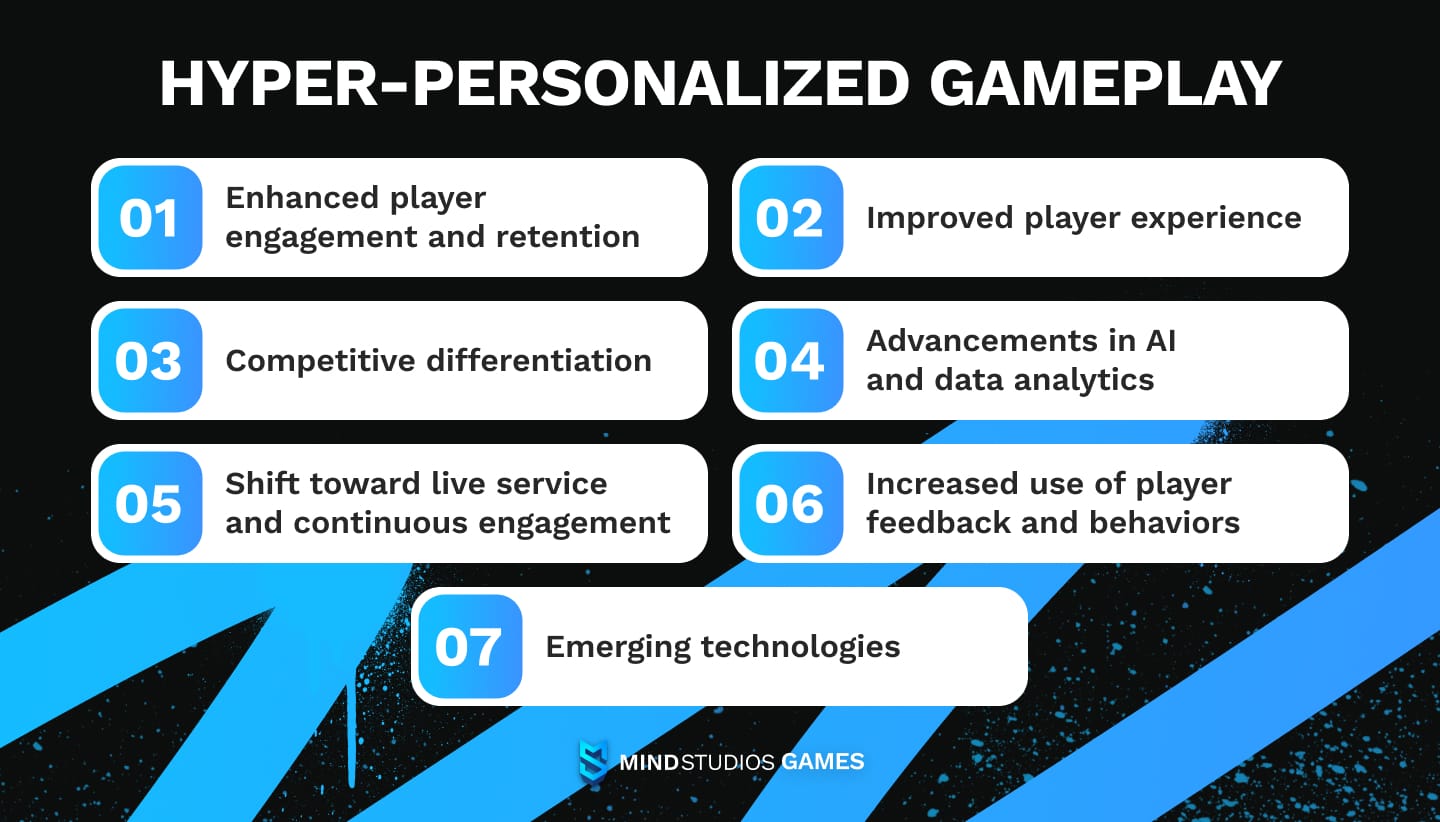
| Why hyper-personalized gameplay is among game development trends 2025 | |
|---|---|
| Enhanced player engagement and retention | Personalization makes gameplay more relevant and enjoyable for each player, increasing their emotional investment and encouraging longer play sessions. |
| Improved player experience | By adapting to individual skill levels or preferences, games can provide the right level of challenge, avoiding frustration or boredom and leading to a more satisfying experience. |
| Competitive differentiation | On the oversaturated gaming market, offering hyper-personalized experiences helps developers stand out by providing unique, one-of-a-kind gameplay for each user. |
| Advancements in AI and data analytics | As we mentioned in the previous section, modern AI tools and big data analytics make it easier to analyze player behaviors in real-time and implement adaptive systems that respond dynamically to individual players. |
| Shift toward live service and continuous engagement | Many games now operate as live services, where continuous updates and personalization keep players engaged over long periods, fostering loyalty and monetization opportunities. |
| Increased use of player feedback and behaviors | Collecting data on how players interact with games allows developers to refine and customize experiences, making games more appealing and user-centric. |
| Emerging technologies | Technologies like machine learning, natural language processing, and procedural content generation are enabling more sophisticated personalization, including adaptive narratives and intelligent NPCs. |
In a nutshell, hyper-personalized gameplay is trending because it aligns with players’ desires for unique, immersive, and meaningful experiences. Successful gaming companies make the most of the technological advancements to deliver these customized experiences at scale, transforming how games are designed, played, and enjoyed.
#3 B2B gamification and branded games
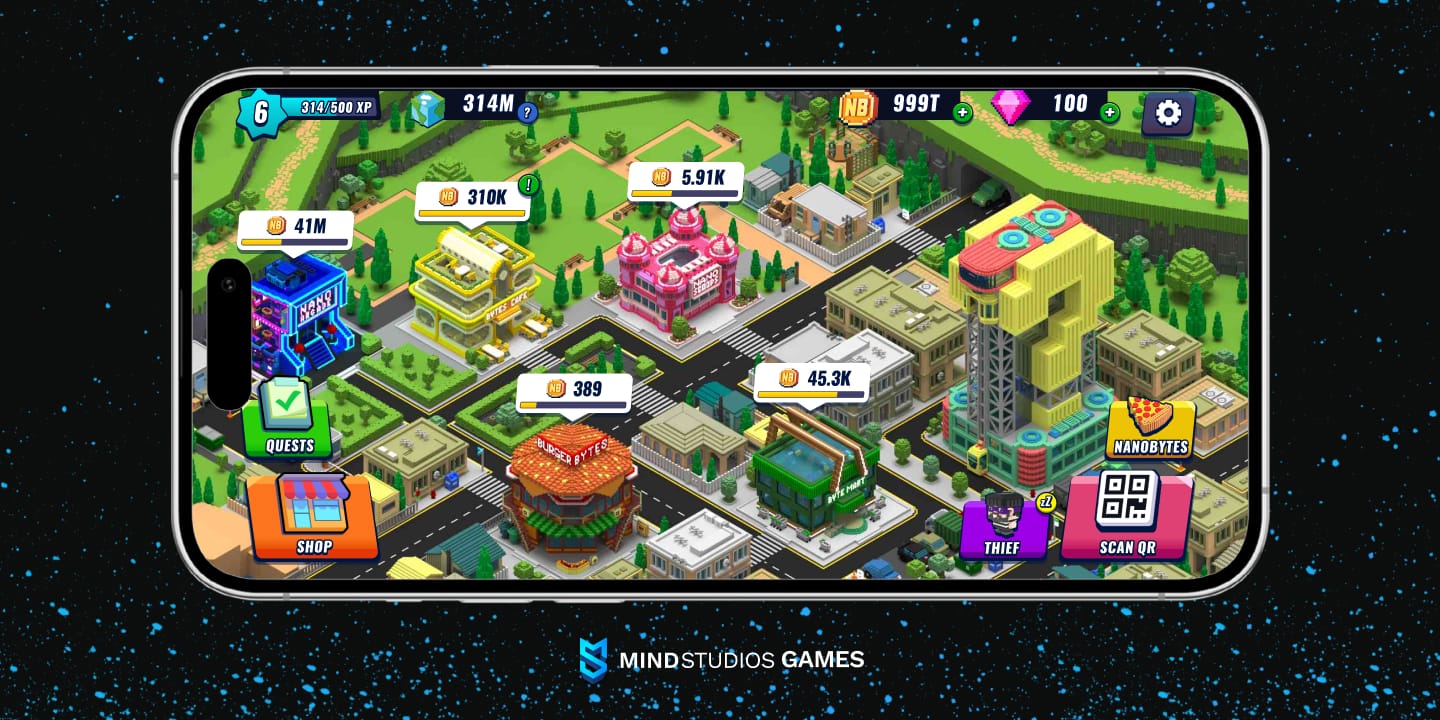
Here’s a trend we at Mind Studios Games are intimately familiar with, having worked with several companies that decided to use video games for brand promotion or as an extension of their business.
Non-gaming companies commission custom games for marketing, loyalty, or training all the time, it’s not really anything new — McDonald’s has been doing that since before the turn of the century. However, the practice is gaining traction and inserting itself into game development trends right now, thanks to the incredible advancement of tech in the last twenty years or so.
Smartphones are becoming more powerful every year, including affordable models from less famous brands. This made mobile games — even sophisticated ones with superb graphics — accessible to a lot more people. Brands — gaming and non-gaming alike — capitalize on that by engaging people with a fun pastime, while inserting their brand imagery into our minds.
There are full-sized branded games and mini-games inside non-gaming apps, games for campaigns, and more. Video games are becoming one of the most popular ways to attract and keep the audience focused on your product.

#4 Short-form games
Short-form games are exactly what the name implies — games that can be played quickly. However, there are two types of those too:
- Games played in brief sessions but can go on for long retention (e.g., puzzles or idle games);
- Games that can be completed fully in a moderate amount of time (e.g., short story-driven adventures, escape rooms, etc.)
Both types usually require easy-to-grasp mechanics for players to get to the game quickly. The first type usually offers high replayability, while the second catches the attention with the narrative and atmosphere.
The reasons they’re among the gaming industry trends is that they fit well into people’s busy schedules, are accessible / have low entry requirements (you wouldn’t want players to learn complex mechanics for short-term entertainment), and are affordable to develop.
#5 Cloud gaming maturity
Technology is evolving extremely fast these days, and the gaming industry is evolving with it. However, when it comes to players, not all of them can or are willing to upgrade their hardware every year. Thus, there is high demand for cloud gaming — where players don’t install games on their own devices, but rather access them via internet. The games themselves are stored on remote cloud servers, and the players’ progress is saved there as well.
Cloud gaming allows players to access games their devices might not have been able to handle otherwise, making gaming a more cost-effective activity. It also widens the selection of games, since there’s no need to choose to save storage space.
For game developers, players’ easy access to games means more potential audience, and therefore revenue.
While cloud gaming faces the challenge of latency and lag — being dependent on the Internet connection and whatnot — the rapid advancement of technological development and the introduction of new, faster and more reliable, internet connections (like 5G) provides gamers with a good enough user experience.
#6 AR/VR
Innovations in AR/VR hardware have enabled developers to create deeply immersive worlds, which, in turn, now allows players to feel as though they are truly inside the game. This enhanced sense of presence makes gameplay more engaging and realistic.
Plus, the VR devices are getting smaller and cheaper, and more smartphones from affordable lineups support AR these days. This reduction in costs have made them more accessible to a broader audience. Wireless headsets, lightweight glasses, and portable AR setups have lowered barriers to entry. Naturally, when such hyped technologies become more affordable, it’s quite expected to see them among trends in gaming.
#7 Advancements in real-time graphics
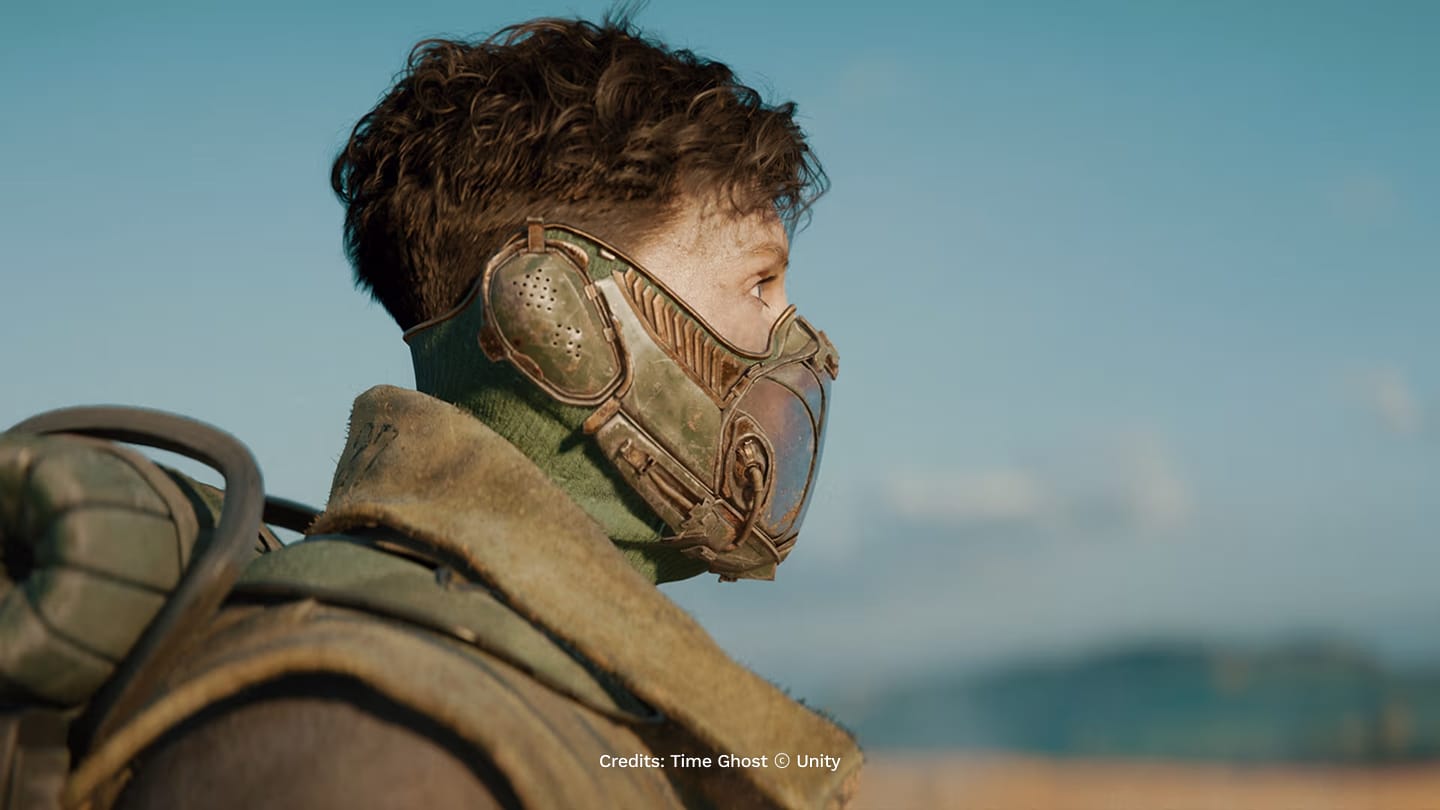
Unreal Engine has had realistic graphics as its biggest selling point since forever, and this year, they’re not pausing innovation in this field. In UE 5.4+, there are updates to Nanite virtualized geometry, Lumen global illumination and reflections system, and enhanced animation tools.
Unity, on the other hand, has updated their High Definition Render Pipeline (HDRP) technology. The result was presented at the Unite 2024 conference — with a short film that looks realistic enough to be mistaken for a movie with real actors.
Outside of specific game engines, the advancement of tech made things like volumetric video more accessible to game developers, allowing for dynamic, live-action-like elements within virtual worlds, blending real footage with game assets seamlessly.
#8 Telegram gaming
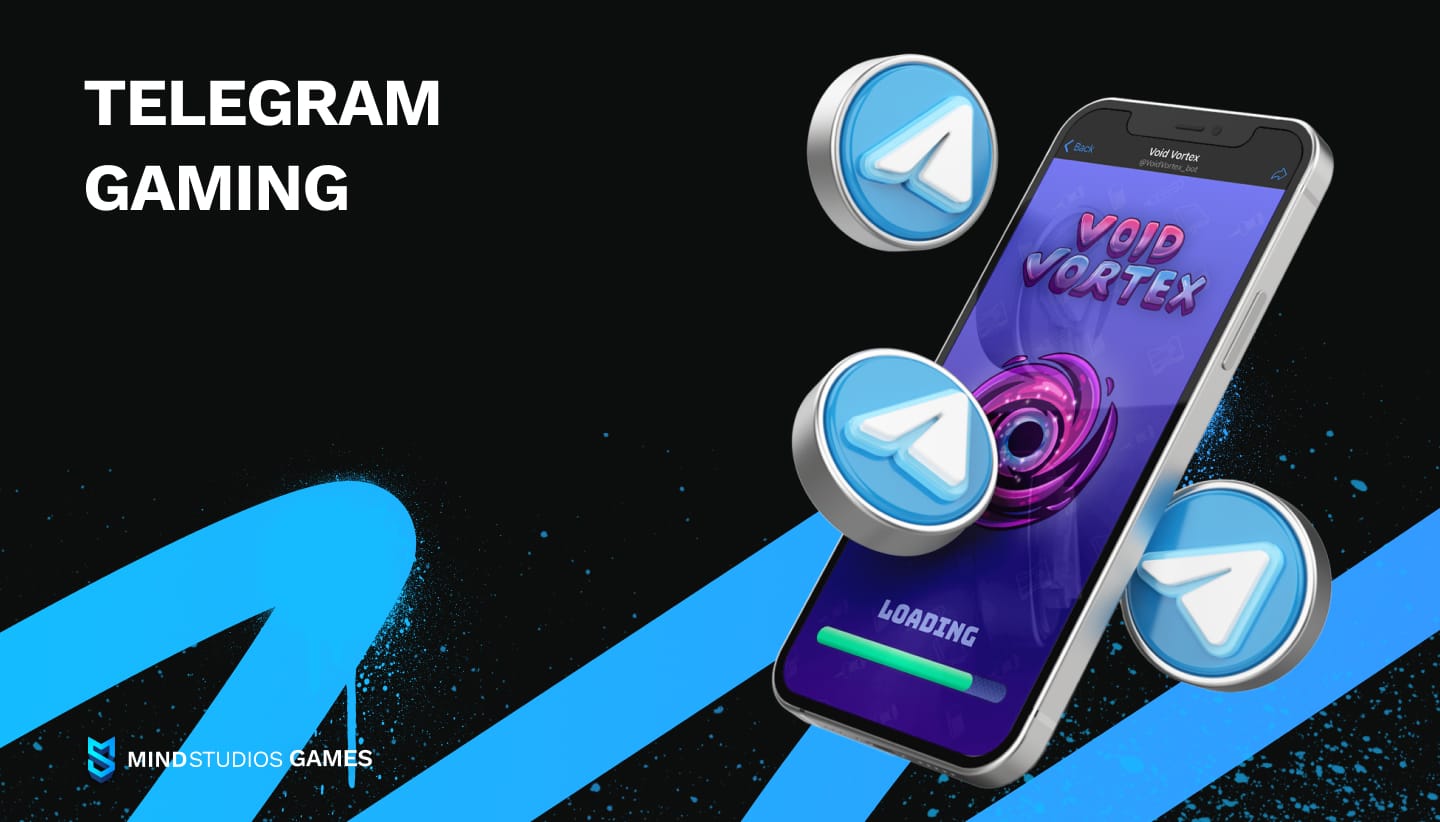
Messenger games aren’t new — WeChat has had them for a while. But last year’s Telegram innovations brought messenger games to a new level, especially from the developers’ point of view.
Integrating games into the Telegram ecosystem is exceptionally easy, and with the option to create games with not just HTML5, but also tools like Unity WebGL, these new chat games have a wide range of possible features to entertain players. Plus, Telegram integrates with crypto, making it a top choice for play-to-earn games.

#9 Blockchain and Web3 games
Web3 games emphasize true ownership of in-game assets — characters, skins, or items — stored as NFTs on the blockchain. This ownership allows players to trade, sell, or transfer assets across different games and platforms, fostering an interconnected gaming ecosystem. This approach makes players more engaged, as they’re investing time and resources into assets that hold value beyond a single game.
Early blockchain games focused on earning real-world value (i.e. Play-to-Earn or P2E games). But this year, the focus has shifted — it’s now moving into immersive experiences, social connectivity, and creative freedom. Blockchain technology now promotes features like player governance, user-generated content, and decentralized economies, making games more community-driven and innovative.
These are the most significant gaming industry trends from the tech point of view. Next, we will talk a bit about two more categories of trends that are exceptionally important if you want to make a game that will capture the audience’s attention.
Creative and gameplay trends
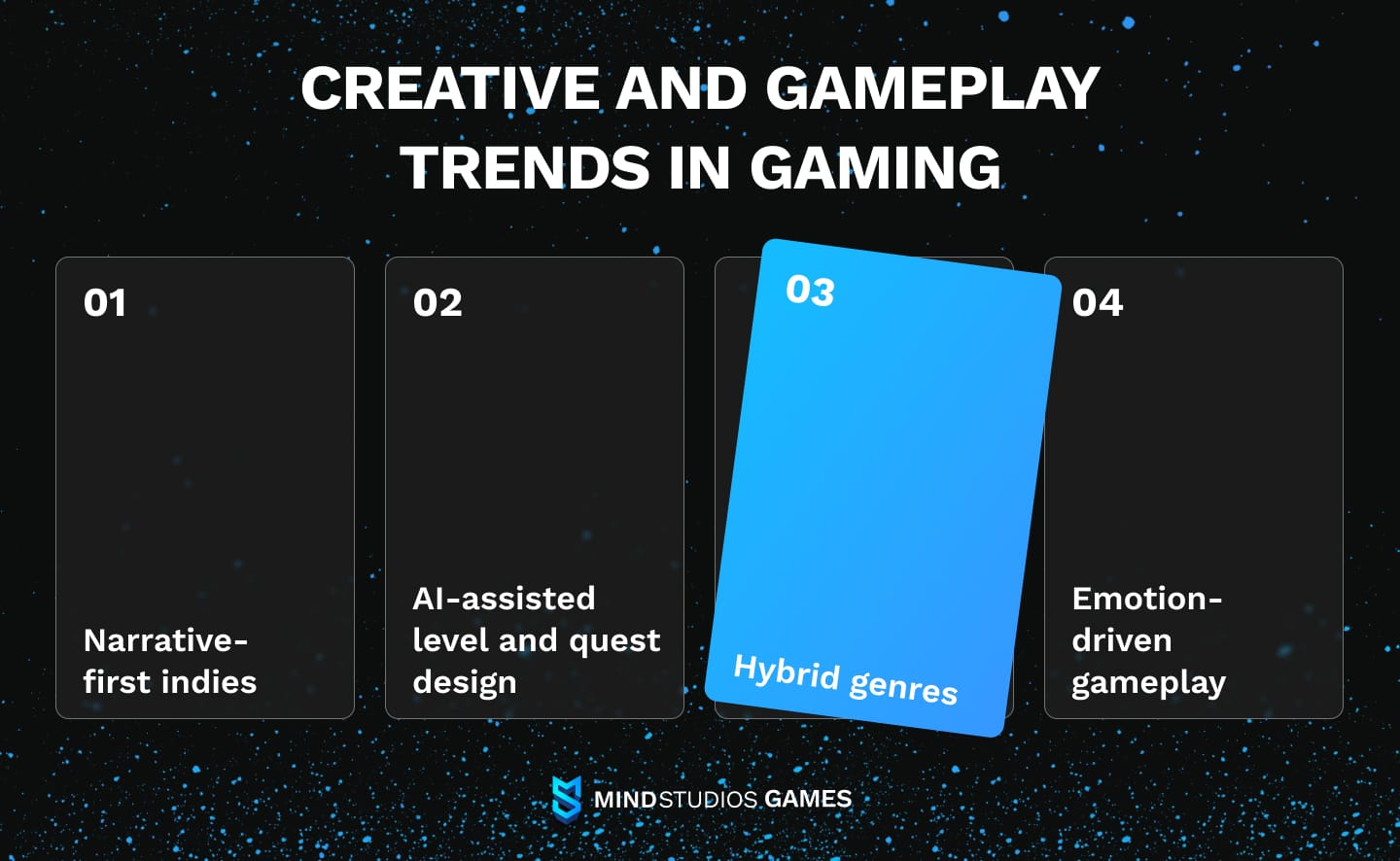
Game development trends outside of tech aren’t as numerous, but no less important. This year (and probably in the nearest future), the following things are gaining traction:
| Creative and gameplay trends in gaming | |
|---|---|
| Narrative-first indies | Indie games that prioritize superb storytelling and rich narratives, often with minimal emphasis on graphics or complex mechanics. Players love them because they offer unique, emotionally engaging experiences that stand out in a crowded market. Even a small team can create memorable stories without big budgets, and with a proper marketing strategy, these games can become everyone’s darlings for a while. |
| AI-assisted level and quest design | Using artificial intelligence to help generate, customize, or optimize game levels and quests makes content creation more efficient and dynamic. Algorithms reduce development time, enable more personalized experiences, and can produce vast amounts of content, keeping games fresh and engaging. The key here is to use them smartly, lest you end up with poorly connected sections of your game. |
| Hybrid genres | Games that combine elements of multiple genres aren’t a new thing, but they’re getting more and more popular each year. Why? Because mixing and RPG with, say, a shooter, or adding puzzles to a platformer enriches the possibilities for engaging gameplay and broadens your target audience. In the competitive video game market, it’s a big benefit. |
| Emotion-driven gameplay | Emotions are a driving force for most passions, gaming included. And while there’s a thrill in landing a crit hit after spending hours grinding to build your character, games that evoke specific emotional responses (joy, fear, or nostalgia) keep players engaged longer. And there are several ways to do that: through storytelling, music, and gameplay mechanics. |
Business trends and monetization shifts
The last section on game development trends 2025 and beyond is arguably the most important for game owners. Of course, you need to know what people want, expect, and find interesting to find and attract an audience, but if you’re in here for the long haul, you also need to understand how to make your game profitable. After all, its upgrades and maintenance cost money too.
So here’s what making waves these days on the business shore of game development.
Rise of subscription models
Subscriptions have been around for a while in gaming, and have proven quite sustainable. Plus, developing games is more expensive now, but increasing game prices is met with backlash from gamers — not exactly the richest populace.
Players welcome things like Xbox Game Pass, and for game studios, it’s one of the extra ways to monetize their games. Netflix games are included in the regular subscription to the service. PlayStation Plus, Nintendo Switch Online, EA Play, and Ubisoft+ — every major player get on board of subscription-based monetization.
For smaller studios with not enough titles to their name to offer them on subscription — there are options to join platforms like Humble Bundle, Apple Arcade, or Prime Gaming.
Ethical monetization
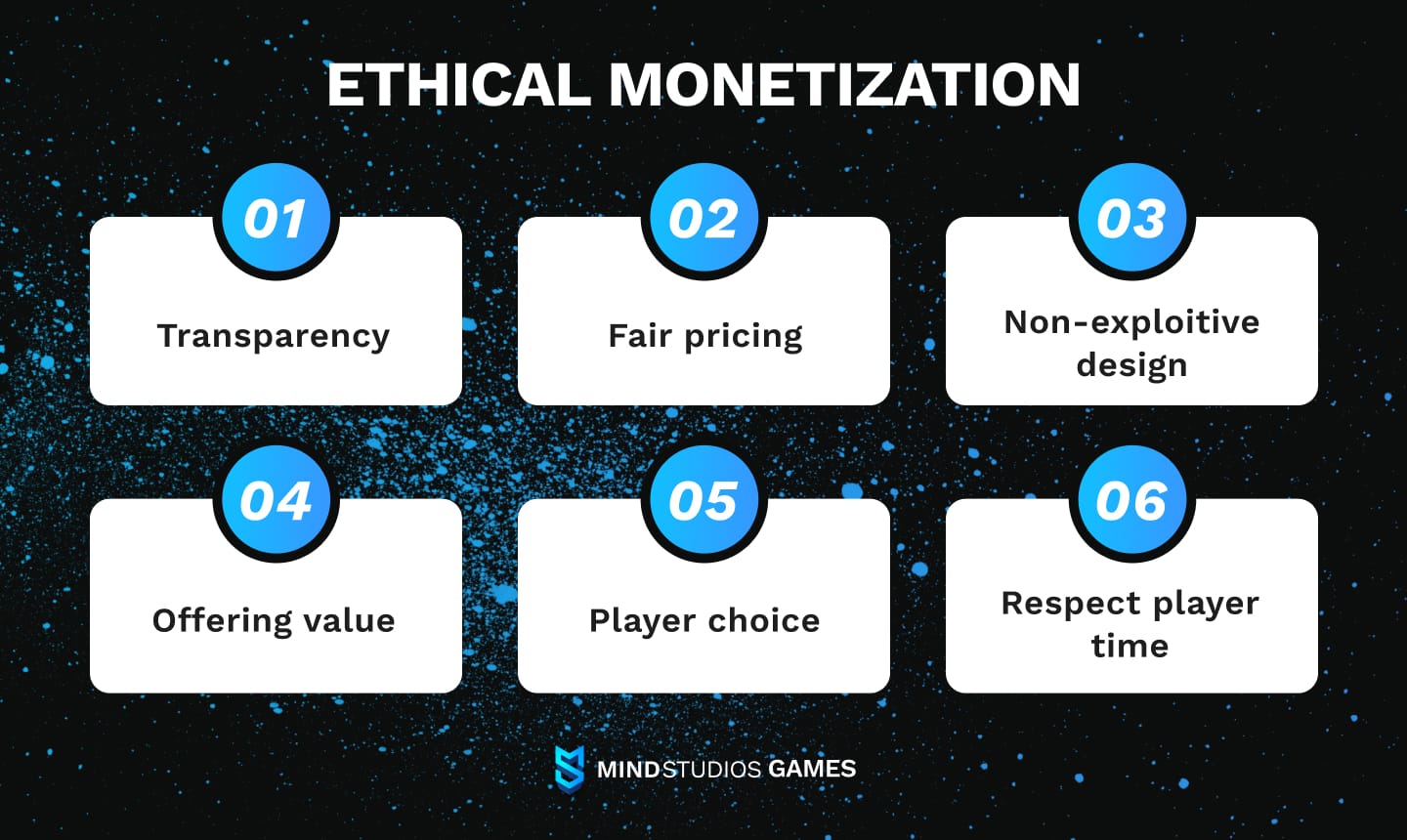
It’s time to move away from aggressive microtransactions. In 2025, players pick up on pushy monetization practices right away — and move on from games that employ them. With the competition on the market, games need to start employing subtler monetization models. Besides, unethical monetization can land you with a lawsuit, like it did to Cognosphere, the developer of Genshin Impact.
So, how do you do this ethical monetization thing?
| Transparency | Clearly communicate what players are paying for, whether it's in-game purchases, subscriptions, or DLC. Avoid hidden fees or misleading language. |
| Fair pricing | Set reasonable prices that reflect the value offered. Avoid predatory tactics like excessive microtransactions or pay-to-win schemes. |
| Non-exploitive design | Ensure that monetization methods do not exploit psychological vulnerabilities, such as addictive mechanics or randomized loot boxes with low transparency. |
| Offering value | Provide meaningful content or benefits with purchases, rather than giving paying players unfair gameplay advantages, especially in multiplayer games. Cosmetic options or quality-of-life improvements are fair game! |
| Player choice | Allow players to earn most or all content through gameplay or purchase it, giving them autonomy and avoiding pressure or coercion. |
| Respect player time | Avoid practices that encourage excessive spending or gaming time at the expense of well-being. |
Being ethical and honest about your monetization strategy will earn your players’ respect and loyalty, increase long-term engagement, and build a good reputation for your brand.
User-generated content
One of the more recent trends in the gaming industry, user-generated content is spreading virally. The reason is quite straightforward: it is making games more participatory and dynamic, and therefore engaging.
- Mods can alter gameplay, add new features, or enhance graphics. There are already monetized mods (via platforms like Nexus Mods) that allow creators to earn revenue.
- Custom worlds, levels, or maps foster creativity and competitive play.
- Special platforms that sell user-made assets, skins, or mods allow players to become creators and allow creators to earn.
Sharing such content fosters community bonding and social recognition and keeps games fresh, encouraging players to return for new content.
As tools become more accessible and monetization models mature, user-generated content is likely to grow even more, blurring the lines between players and creators, and fueling innovation in game design and community engagement.
Cross-platform launches
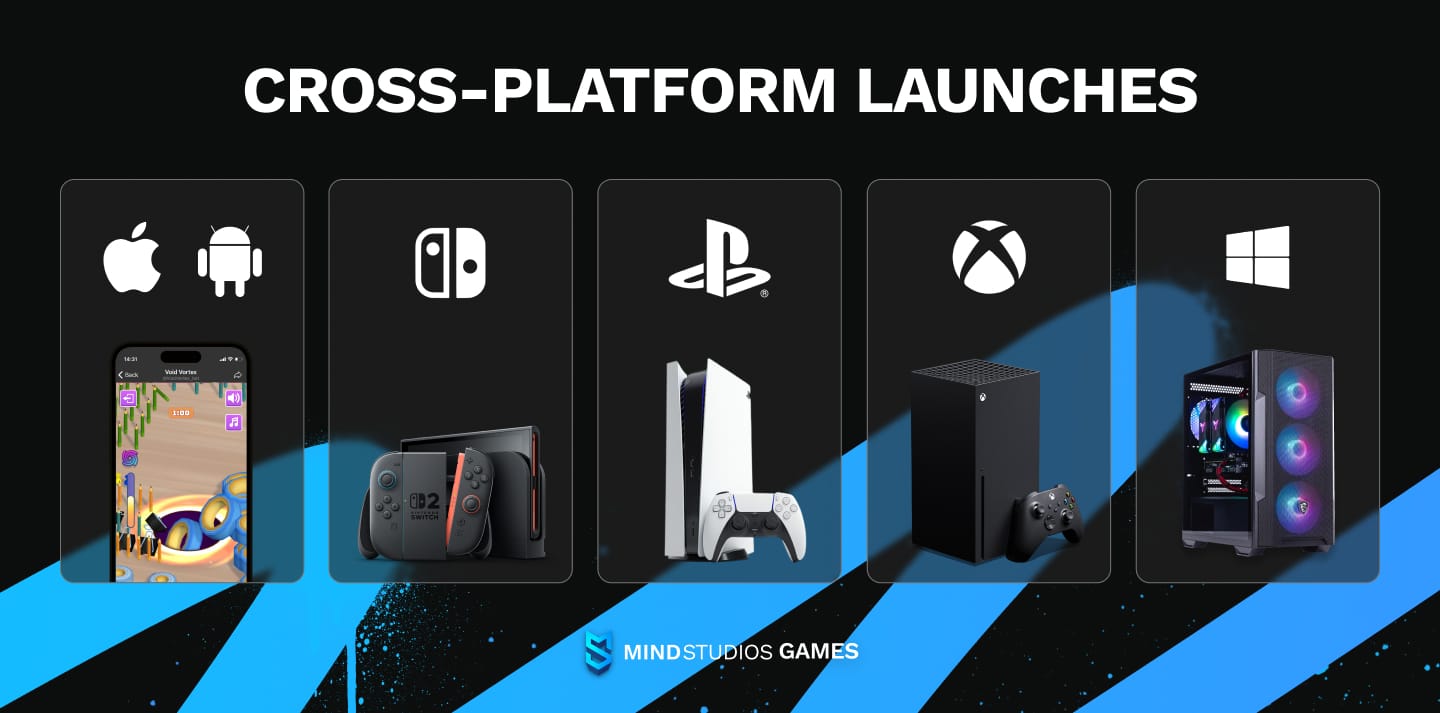
Just some years ago, games launched either exclusively on a specific platform, or on several but with breaks in between, sometimes very long ones. These days, waiting often means losing a big chunk of the audience, and video game developers do not enjoy that. (And who would?)
The already mentioned Genshin Impact was designed for both PC and mobile from the get-go; Fortnite Battle Royale released simultaneously on macOS, PlayStation 4, Windows, and Xbox One (that’s PCs and consoles), with iOS following only half a year later and other platforms soon after that; Hearthstone had PC and mobile launch dates only a month apart.
These successful examples show an apparent move towards not just cross-platform accessibility, but drastic shrinking of time between platform-specific releases. It also makes for a great evidence to the tech advancements — after all, this is one of the game development trends that became possible only because mobile devices can now handle resource-heavy games.
Risks and challenges in 2025
Now, trends are good and all, but this article wouldn’t be complete without mentioning the emerging and continuing challenges. What to look out for, and how to counter the thing that make game developers’ life difficult? We have top four challenges that are either relatively new or are reaching new heights this year. Here they are.
Market oversaturation
This one is far from new, but it naturally gets worse with time — after all, there’s no way humanity just stops bringing new creative people and projects out. (Hopefully, not!)
For developers and game owners, the increasing number of titles and platforms intensifies competition, making it harder for new or indie games to stand out and succeed financially. That’s why we need articles like this one, isn’t it? Because to stand a chance on this market, you need to know what are the latest trends in game development.
How to beat it? Several ways.
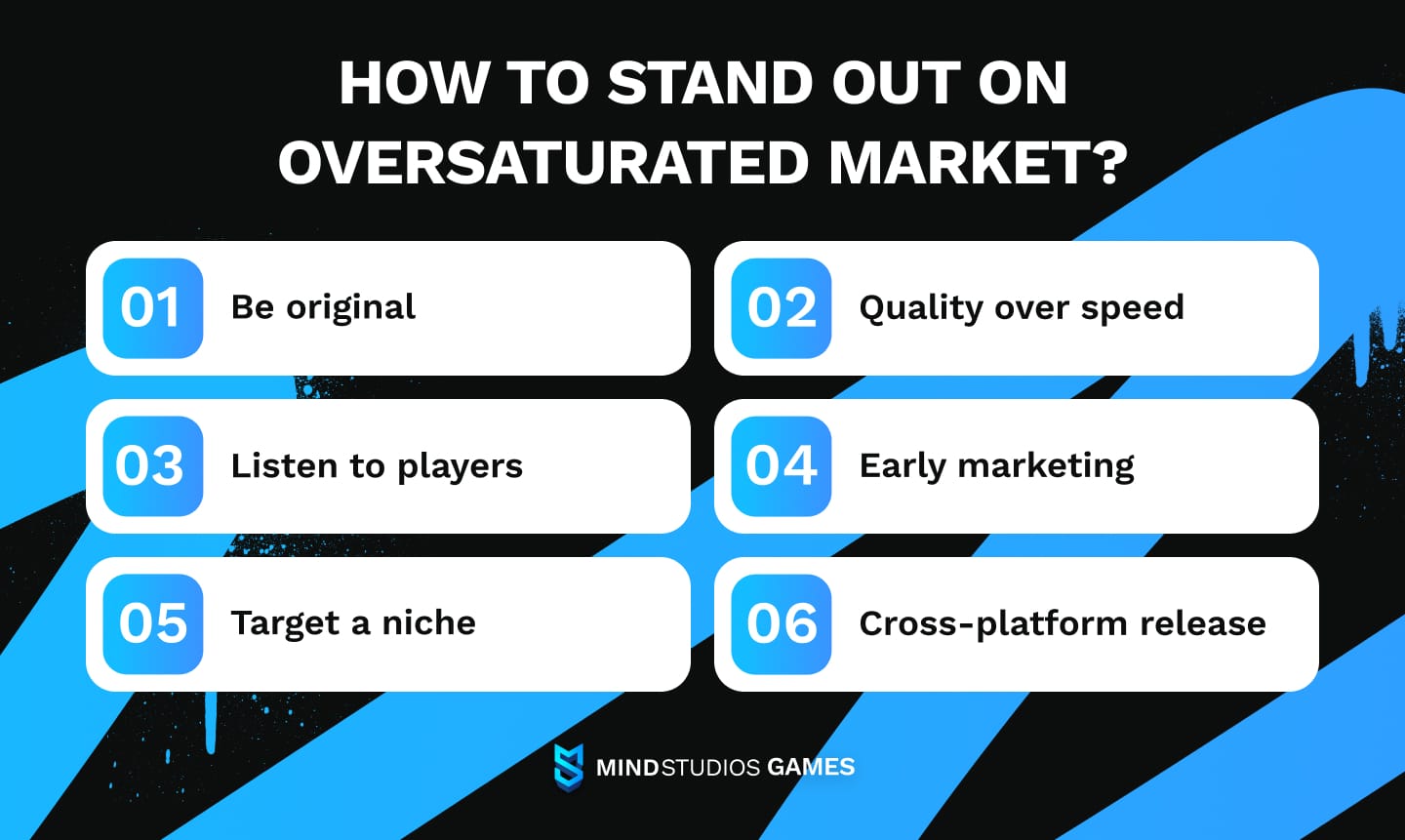
- Be original. Sounds obvious, but it’s not that easy — it seems that everything’s already been made one way or another. Do your research and find even small things that will help your game stand out. Mix existing things in new ways — we did mention hybrid genres above for a reason.
- Listen to players. No better way to know how to cater to your audience than asking them.
- Target a niche audience. Identify a specific community or interest group and tailor your game to appeal directly to them.
- Prioritize quality over speed. Find game developers with experience, allocate enough time and budget in a smart way so that you hit the trend without sacrificing time for testing or proper level design, for example.
- Start your marketing early. Build anticipation and, if you can, a community that will wait for your game, offer them snippets and beta versions for feedback, tinker your game to perfection before the Big Day.
- Consider cross-platform release and multiple distribution platforms. Try to reach as many players as you can. Porting games to multiple platforms is easier today than even five years ago.
Balancing player privacy and personalization
With stricter laws like GDPR, CCPA, and emerging regulations, developers must ensure compliance while collecting data for personalization. Mishandling data risks legal penalties and loss of player trust. Moreover, players themselves increasingly demand transparency and control over their data, and implementing clear consent mechanisms and allowing users to opt in/out of personalization features is quite complex.
Blockchain can enhance security but also introduces new risks like exposing transaction histories if not managed properly. Techniques to personalize experiences without compromising identities are vital. However, ensuring these methods are effective and do not degrade personalization quality is challenging.
The only recipe here is to hire a professional team with relevant experience — someone who worked on privacy protection in game development. If you’re going for blockchain, the developers there might be more costly, but better have good ones than regret it later.
Managing rising development costs while keeping games accessible
Rising complexity of games increases development costs, but, as we already mentioned, increasing the selling price of games is not always a sustainable solution. Even big name game developers struggle with this, let alone indies.
There are several pointers we can offer in this regard.
Ways to keep game development within the budget |
|
|---|---|
Adopt Agile and modular development |
Use iterative development cycles to test and refine features early, avoiding costly reworks. Build modular systems that can reuse assets and code, saving time and resources. You can also streamline workflows with efficient project management, clear milestones, and collaborative tools. |
Prioritize |
Focus development efforts on the core mechanics and features that deliver the main experience. Push back features that are nice-to-have but not essential. This will reduce scope creep and unnecessary costs. |
Use affordable tools and middleware |
Choose cost-effective or free engines (like Unity or Godot) and assets (from asset stores or open sources) to cut costs. Customize existing tools rather than developing everything from scratch. |
Collaborate |
Partner with other developers or studios to share resources and reduce costs. Consider grants, subsidies, or partnerships with platforms that support indie development. |
Plan for the future |
Develop a roadmap that balances initial development costs with post-launch updates and content, spreading costs over time. Focus on creating scalable content that can be expanded gradually. |
Consider crowdsourcing |
Open development models or crowdfunding (like Kickstarter) can help offset some costs and build a dedicated audience. |
Engage community early |
Open or semi-open beta, or even alpha stage of development will offer player feedback early, giving your developers an opportunity to fix or rework things before other things affected by it pile on top. |
Automate repetitive tasks |
Scripts or tools for that already exist, and they will save your developers’ time — and, consequently, your money. |
AI overuse
Finally, the elephant in the room. AI tools are a great help to game developers. They can help design new levels, speed up artists’ and coders’ work, and even help ideate your game’s plot lines. However, the current level of AI development is far from perfect, and relying on it too much will hurt your game’s success chances rather than increase them.
Generative AI in game development can’t fully replace an artist working on your game’s art and animation, your game designer, testers, or writer. Automated content tends to lack coherence, requiring extensive human oversight. Even trained on your team’s work explicitly, the quality of GenAI is inconsistent.
Plus, developers might become overly dependent on AI tools, and that will reduce their problem-solving, artistic intuition, and craftsmanship. This can lead to skill erosion over time and a decline in innovative thinking within the team.
Hence, while AI as one of the game development trends 2025 can be a great boon to developers, it needs to be used in a smart way to continue being a boon and not become a bane.
Conclusion
Trends come and go, but ignoring them doesn’t do any good for anyone who wants to stay relevant. Gamers are often at the top of tech innovation, so following game development trends increases your idea’s chances to be noticed in a positive way.
Besides, this year’s tech trends offer huge opportunities to make the game creation process faster, cheaper, and more diverse with less effort — that is, if you leverage the benefits right. AI, AR/VR, Cloud computing, Blockchain, advancements in game graphics — a lot of things today push the gamedev industry forward. And what better time is there to use them all to make your outstanding idea into a live game?
We hope this article was informative and helpful. And if you’re looking for a game development partner who’s on top of the trends, has experience in multiple game development genres, and offers quality services with speedy delivery — don’t hesitate to reach out to Mind Studios Games. Our team would be happy to be part of your game idea’s development. Contact us via a form, or get in touch with our Head of Gamedev on LinkedIn.