
 ChatGPT
 Perplexity

Learn how to make a game like Stumble Guys. Step-by-step guide on design, tools, and multiplayer development from the experts at Mind Studios Games.
Key takeaways:
- Stumble Guys is one of the select mobile games that don’t lose popularity even years after release;
- The secret behind such popularity often lies in well-thought-out concept and consistent updates;
- The multiplayer royale genre is not as overcrowded as some other mobile game genres, which gives new titles more space for creativity and higher chances of success.
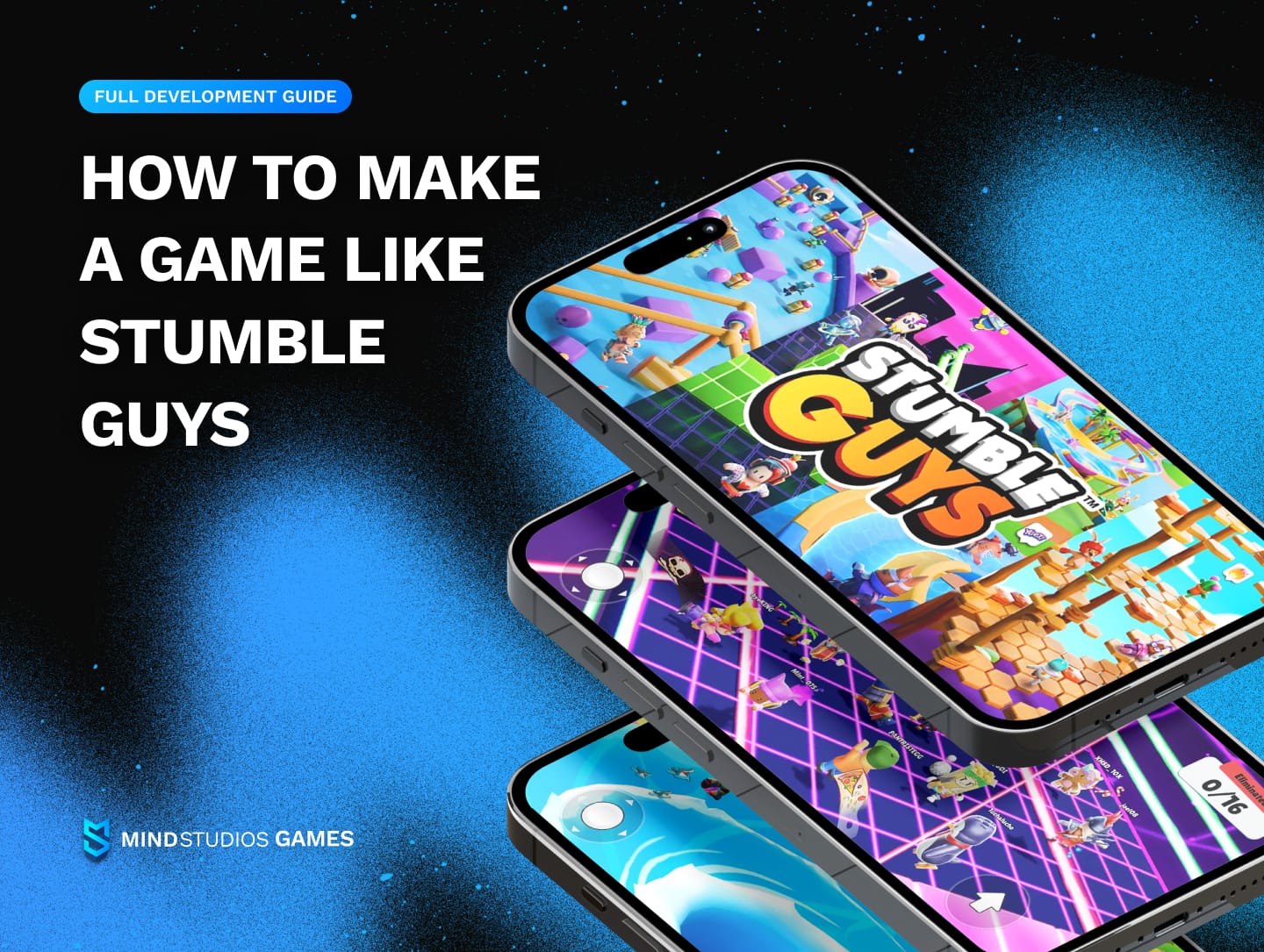
Stumble Guys is one of the most recognizable multiplayer party games in the mobile gaming industry. Since its release, it has attracted millions of players worldwide with its chaotic obstacle courses, colorful visuals, and competitive yet lighthearted gameplay. Even years after initial release, Stumble Guys continues to grow in popularity, with consistent updates, cross-platform support, and an active player community.
For developers, this success highlights a strong market demand for engaging multiplayer experiences that blend skill, humor, and accessibility. Creating a game like Stumble Guys means entering the thriving genre of multiplayer royale and party games, where creativity, design precision, and solid technical execution matter most.
In this article, we’ll walk you through the complete process of how to make a game like Stumble Guys, from concept development and design to tools, technologies, and production workflows. Drawing on Mind Studios Games’ experience in multiplayer and mobile game development, we’ll share key steps, insights, and best practices to help you plan and create a competitive, engaging product.
If you’re considering your own Stumble Guys-inspired project, this guide will help you get started with a clear vision and the right technical foundation.
Concept development
Every successful game starts with a strong concept. Before writing a single line of code, it’s crucial to understand what makes your idea unique and engaging. In the case of a Stumble Guys-style multiplayer game, that means balancing chaotic fun with accessibility and replayability.
The development starts with defining the core gameplay loop — the fundamental actions players repeat throughout the game. For example, in Stumble Guys, this involves running through obstacle courses, avoiding traps, and racing others to the finish line. Your version could feature new environments, distinctive movement mechanics, or creative power-ups to stand out.
When brainstorming and refining your idea, consider:
- Theme and setting: Is your game whimsical, futuristic, or adventure-themed?
- Player count: Will it support 10, 50, or 100 simultaneous players? This will affect your backend.
- Core emotions: Should the experience focus on laughter, competition, or teamwork?
It’s also important to identify your unique selling points (USPs) early. It could be custom physics interactions, distinctive art style, or original level designs that can make your game recognizable. Testing prototypes quickly will help you validate what feels fun and what doesn’t.
Game design and mechanics
Designing a game like Stumble Guys involves a deep understanding of player engagement and pacing. Every obstacle, animation, and level layout contributes to the player experience.
Here are the key design components to focus on:
-
Level design
Levels are the heart of any game. They must be visually appealing, strategically challenging, and optimized for short, replayable sessions. To maintain excitement, vary obstacles, terrain, and hazards across maps.We use a modular design approach — building reusable assets and interactive elements that can be mixed and matched to create new levels quickly.
-
Character design
Simple yet expressive characters are a major part of Stumble Guys’ charm. Use bright colors, humorous animations, and customizable skins to encourage player personalization. This not only improves engagement but also supports monetization through cosmetics. -
Obstacles and challenges
Variety keeps players hooked. Introduce a balance between predictable and random elements so that each match feels unique. Physics-based interactions (like spinning platforms or falling blocks) make gameplay both fun and unpredictable. -
Balancing difficulty and progression
As players improve, the game should evolve. Gradual difficulty scaling and fair matchmaking ensure new players don’t feel overwhelmed while experienced ones stay challenged. Progression systems — such as rankings, achievements, or unlockable skins — enhance long-term engagement.
When defining Stumble Guys-like game mechanics, focus on timing, precision, and controlled chaos. Physics-based collisions, latency compensation in multiplayer sessions, and responsive character controls are critical to the game’s feel.
Mind Studios Games’ recommendation: Test level flow frequently with small player groups. Player feedback at this stage often reveals balance issues or movement frustrations that aren’t visible during internal testing.
Tools and technologies
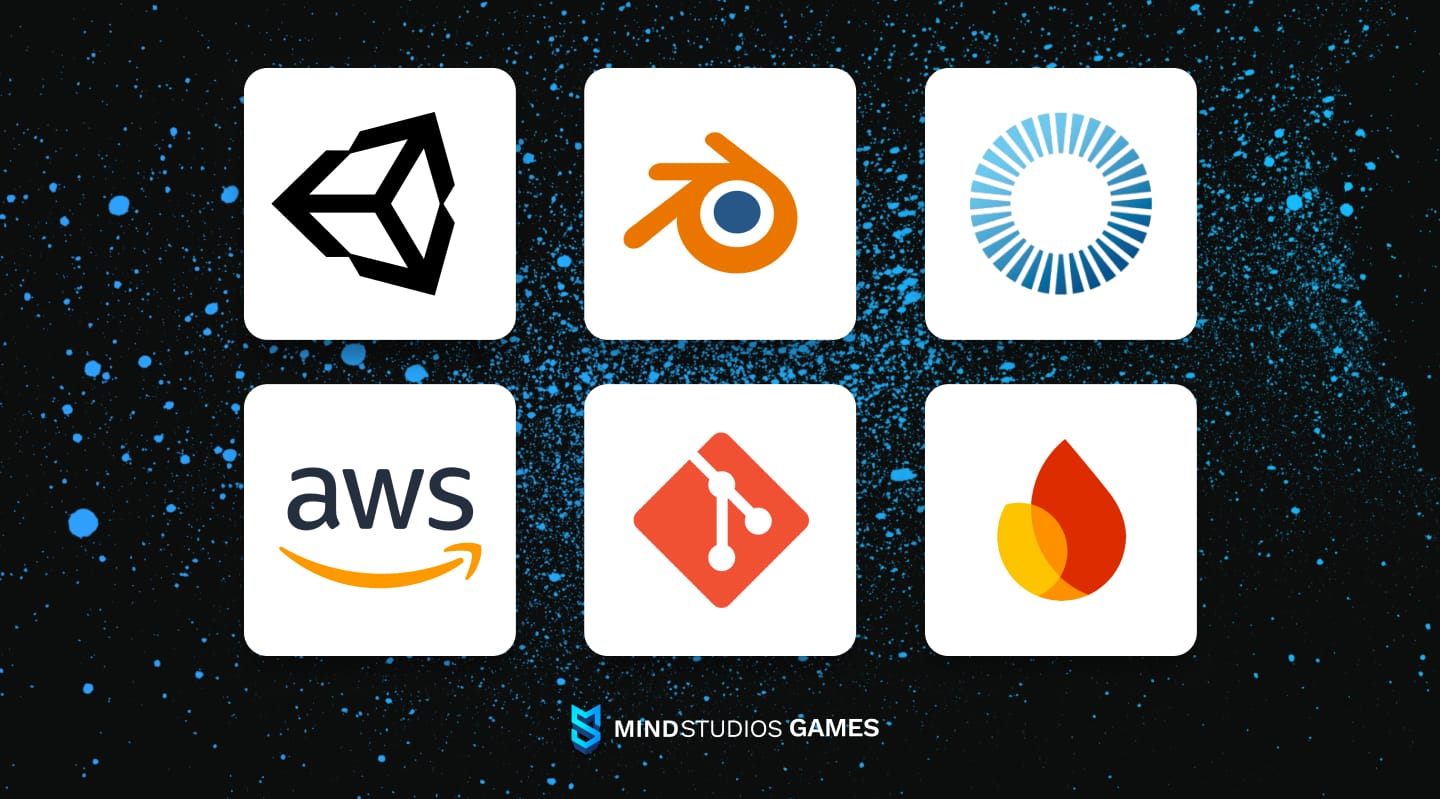
Choosing the right tools and technologies early on lays the foundation for efficient development and scalability.
Game engines
For most studios, Unity is the go-to choice for Stumble Guys-like mobile game development thanks to its robust networking systems, cross-platform compatibility, and active community. Unity offers flexibility in asset management, optimization, and integration with third-party multiplayer frameworks.
Unreal Engine is rarely used in this genre, as it is more suitable for games focusing on high-end visuals and console-quality effects, and it requires more technical resources.
Another option is Godot, since it’s open-source and also has a sizable community. However, its 3D capabilities are still limited compared to Unity and UE. Even though versions 4+ have been trying to close this gap, Godot is still better suited for 2D games.
Design tools
Creating a game like Stumble Guys involves producing 3D characters, animations, and environments. Tools such as Blender, Maya, and Photoshop are industry standards for asset creation. They allow teams to model, texture, and animate quickly while maintaining quality consistency across devices.
Networking and multiplayer frameworks
Multiplayer systems are the backbone of games like Stumble Guys. Solutions like Photon Unity Networking (PUN) or Unity’s Netcode for GameObjects simplify synchronization, matchmaking, and session management. For Unreal projects, Epic Online Services offers scalable multiplayer support. Choosing a Stumble Guys engine setup depends on your team’s technical expertise and scalability goals.
Additional tools
Some other tools necessary or useful for Stumble Guys-like game development:
- Version control: Git or Plastic SCM for collaborative workflows.
- Analytics: Firebase or GameAnalytics to track player behavior and retention.
- Backend services: PlayFab or AWS GameLift for server management and scalability.
Mind Studios Games’ recommendation: Start small with networking. Build a local multiplayer prototype first to ensure smooth synchronization and performance, then scale to cloud servers once mechanics and physics are stable.
Developing the game
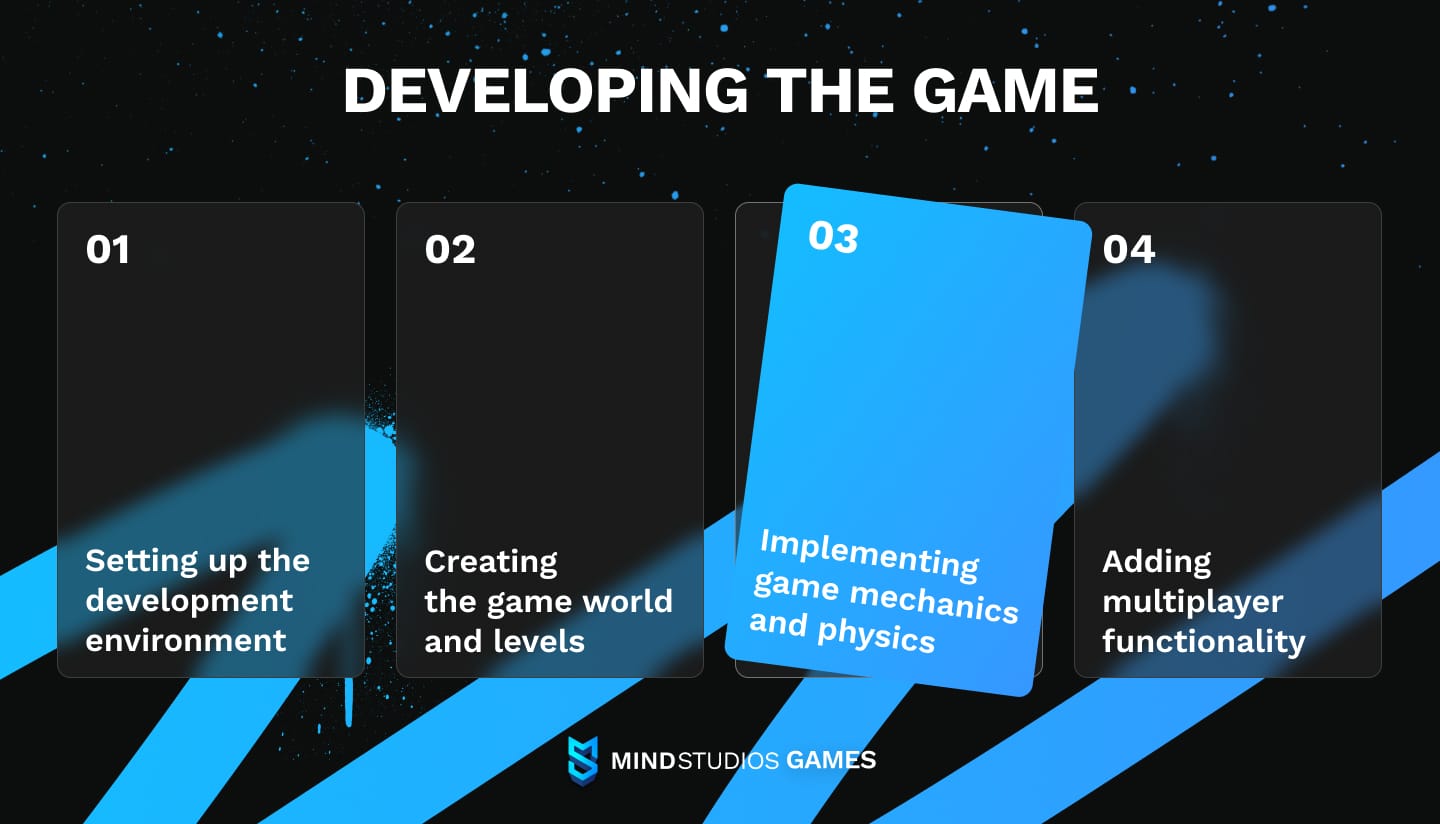
Once your concept and design foundations are clear, it’s time to move into production. Developing a Stumble Guys-like mobile game requires careful planning, teamwork, and iteration. Here is a simplified roadmap that outlines the typical stages.
Setting up the development environment
Choose your development engine and configure version control. Prepare your environment by integrating essential SDKs, multiplayer frameworks, and asset libraries. A well-structured folder hierarchy and code architecture early on will save substantial time later in production.
Creating the game world and levels
Build modular, replayable maps inspired by obstacle-course design. Use iterative testing to verify that navigation feels natural and that environmental hazards are both challenging and fun. Add small random elements to ensure no two runs are identical.
Each level should take no more than a few minutes to complete, keeping matches fast-paced and suitable for mobile play sessions.
Implementing game mechanics and physics
Stumble Guys' game mechanics shine in physics-driven collisions, dynamic obstacles, and fluid controls. Unity’s built-in physics engine can simulate realistic movement while maintaining performance stability across devices.
Key mechanics to implement include:
- Jumping, sliding, and grabbing interactions
- Dynamic obstacle responses (e.g., spinning hammers, collapsing bridges)
- Knockback and collision forces
- Player respawn and checkpoint logic
Adding multiplayer functionality
The goal here is to allow players to join sessions, compete, and interact in real-time without noticeable lag.
For how to develop Stumble Guys app alternatives, consider:
| Matchmaking systems | Group players of similar skill levels or randomly for casual play. |
| Lobby management | Enable quick replays, team formation, or party invites. |
| Latency optimization | Use authoritative servers or predictive client models to reduce lag. |
| Cross-platform play | Connect users across mobile, PC, or console for larger player pools. |
| Regular stress testing | Simulate hundreds of concurrent players to identify synchronization or server bottlenecks early. |
Mind Studios Games’ recommendation: Focus on scalability from the start. Even if you launch with small matches, having a backend architecture that supports future growth will prevent major technical debt later.
Multiplayer mobile games are among our specialties. Reach out to our team if you need guidance on scalable multiplayer architectures or backend optimization.
Graphics and animation
Visual appeal plays a major role in attracting and retaining players. The best games in the party game development genre are instantly recognizable — colorful worlds, expressive characters, and fluid animations all contribute to a memorable experience. So what are the recommendations there?
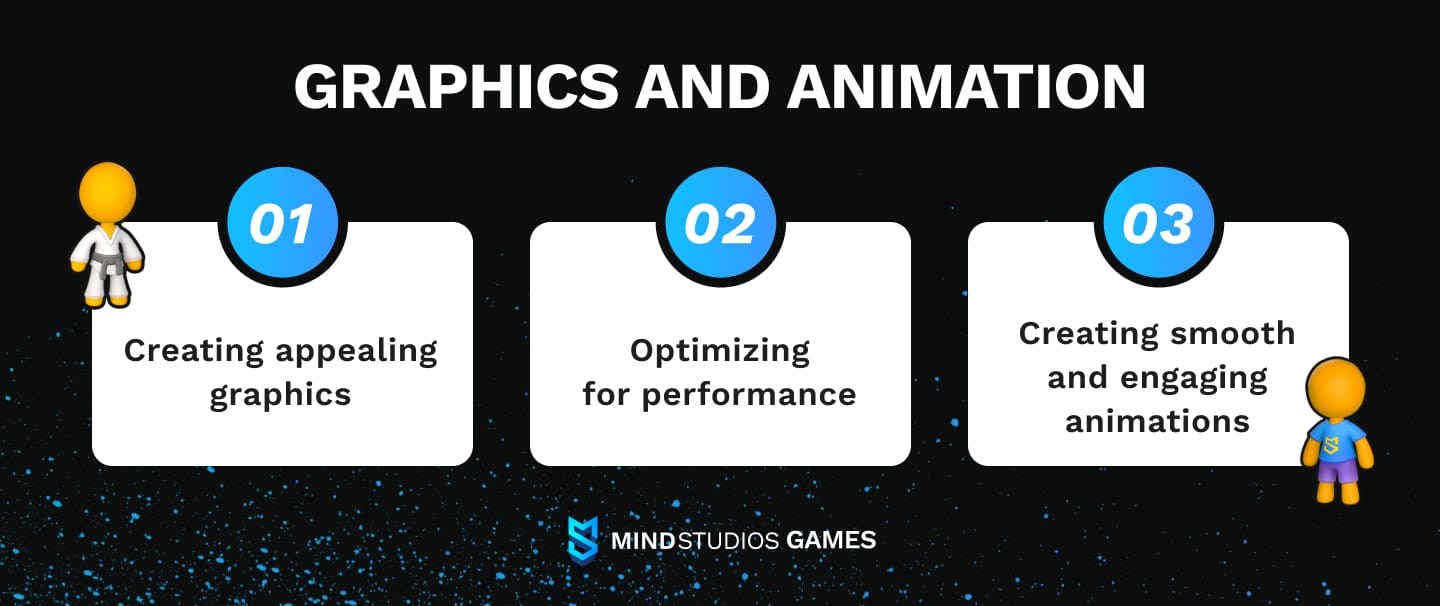
#1 Creating appealing graphics
When designing visuals in a mobile party game, clarity and charm matter more than realism. Players should instantly recognize objects, obstacles, and characters, even on small screens. Simplified shapes and bright color palettes improve visibility and make your game approachable to a wider audience.
To maintain consistency:
- Develop a clear art style guide covering color use, lighting, and proportions.
- Optimize assets to minimize draw calls and memory usage.
- Use level-of-detail (LOD) systems to maintain performance on various devices.
#2 Optimizing for performance
Mobile games must run smoothly even on mid-range hardware. Use texture compression, GPU instancing, and efficient shaders. Reduce overdraw and unnecessary particle effects. You can profile performance using Unity Profiler.
#3 Creating smooth and engaging animations
Animations bring life to the characters. Blend fun, exaggerated motion with responsive input to ensure player control feels natural. Tools like Unity’s Mecanim can help streamline workflow for transitions and blending.
Mind Studios Games’ tip: In our experience, small animation details — like a stumble recovery motion or a playful victory dance — significantly enhance player satisfaction and brand personality.
Sound design and music
Sound design often determines how immersive a game feels. In games like Stumble Guys, sound cues and upbeat music reinforce the energetic atmosphere and provide players with critical feedback during gameplay:
- Emotion: Music and effects set the tone for excitement and fun.
- Feedback: Sounds of collisions, jumps, hits, and victories make gameplay more intuitive.
- Identity: A unique audio palette helps distinguish your game from competitors.
Developers can either produce original sound effects in tools like Audacity or Adobe Audition or license them from libraries (Epidemic Sound, Boom Library, etc.). For background music, loopable upbeat tracks with strong rhythm work well — they help maintain energy during short, repeatable matches.
Balance audio layers carefully to avoid overwhelming your players. Implement spatial sound to make effects directional and contextual. Use an adaptive soundtrack that changes intensity based on in-game events — like a countdown or final stretch to the finish line.
Testing the game
The ultimate truth of game development is that you can’t do too much testing 😅
Game market is extremely saturated, and new mobile games pop up daily. Testing your game thoroughly before launch is a must if you want it to be successful. This gets even more important when we’re talking about LiveOps games, where frequent updates need to fit seamlessly and not disrupt the core gameplay.
Generally, we recommend our clients start testing as early as the first low-fidelity prototypes. This ensures that the game’s UX is intuitive, mechanics are engaging, and nothing glitches early on. After all, it’s way faster and cheaper to catch bugs and inconsistencies early on than fix big chunks of the game later.
Launching your game
After development and testing, the final step is introducing your product to the market. Launching a multiplayer title requires strategic planning across marketing, distribution, and community management.
Pre-launch preparation |
|
Marketing strategy |
Use a mix of organic and paid strategies. Collaborate with micro-influencers in gaming communities, publish developer diaries, and use targeted ads to reach likely players. Create a short, shareable launch video optimized for platforms like TikTok and YouTube Shorts. |
Distribution channels |
Release your game on your chosen platform(s). If applicable, consider adding custom game or private game modes to attract groups of friends and communities looking for personalized experiences. |
Post-launch support |
Continuous updates and seasonal content keep engagement high. Regular patches, new maps, and limited-time events are key to player retention. Track analytics to monitor user activity, churn, and feedback trends. |
Mind Studios Games’ recommendation: Plan your live-ops strategy before launch. Even simple rotating challenges or cosmetic drops can significantly extend player lifetime value.
Case studies
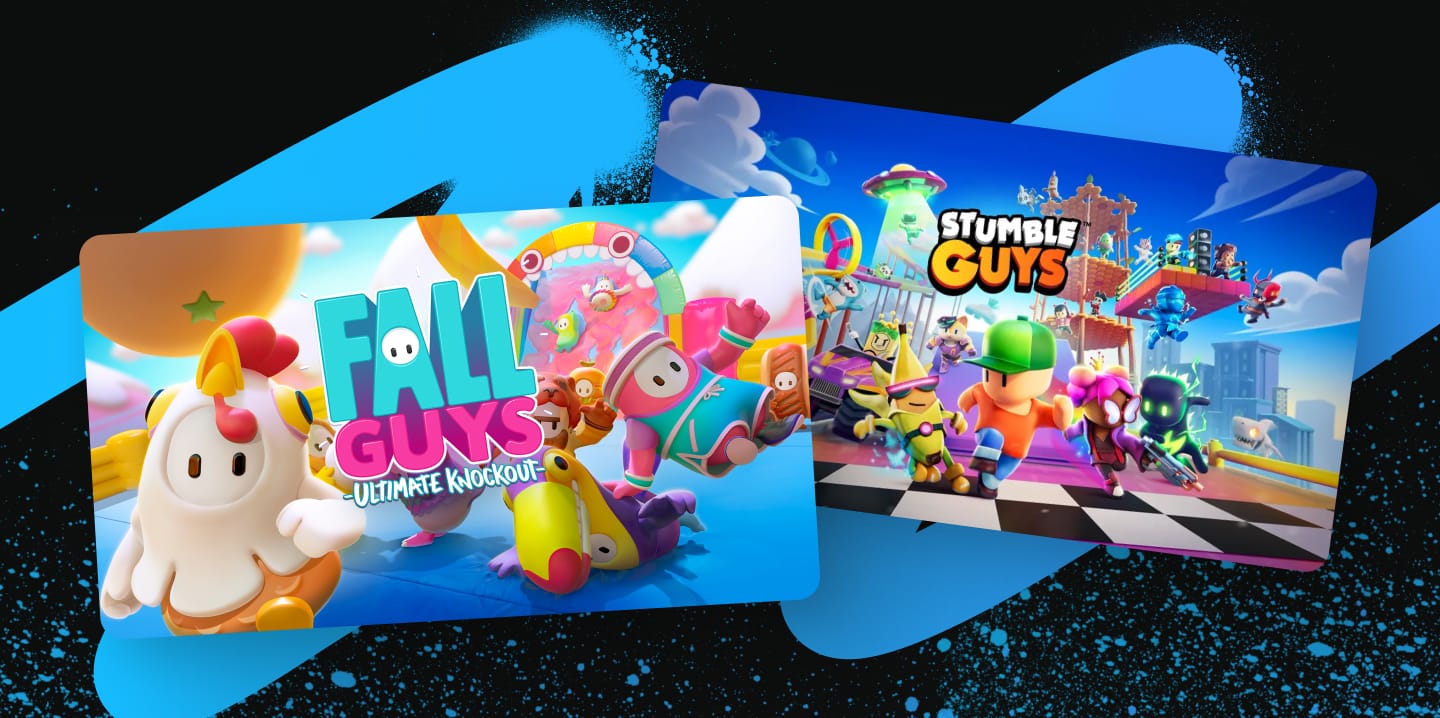
Examining other successful games in the multiplayer party genre provides valuable insights into what works and why. Here are two of the most popular examples that you might want to learn from.
Stumble Guys
The titular game of this article, Stumble Guys was initially developed by Kitka Games and later acquired by Scopely. It grew from a niche indie project to a global hit, popular enough to be ported first to Steam in 2021 and then to PS and Xbox in 2024.
The developers focused on creating accessible, lighthearted gameplay that worked smoothly on mobile devices while maintaining competitive multiplayer sessions for up to 32 players. Their focus on simple controls, colorful environments, and short rounds made the game ideal for both casual and competitive audiences.
Fall Guys: Ultimate Knockout
Fall Guys set the standard for physics-based battle royales with its vibrant visuals and unpredictable chaos. The development team at Mediatonic built the game in Unity, focusing heavily on fun rather than competition. What made Fall Guys successful was its consistent post-launch support — regular content updates, collaborations, and community engagement that kept players returning.
Conclusion
Building a game like Stumble Guys requires creativity, technical skill, and a deep understanding of player psychology. From concept ideation to post-launch updates, each phase plays a crucial role in shaping a successful and engaging experience.
The Stumble Guys multiplayer royale genre continues to evolve, and developers who prioritize player experience and replayability have tremendous opportunities ahead. If you’re planning to create a similar project, our experts can help you refine the concept, choose the best technology stack, and manage production. We work both as full-cycle developers and in co-development format, and we also can provide specific specialists if your existing team lacks certain expertise.
Ready to start creating a game like Stumble Guys? Get in touch with Mind Studios Games to discuss your project and receive expert advice on turning your idea into a market-ready multiplayer title.