
 ChatGPT
 Perplexity

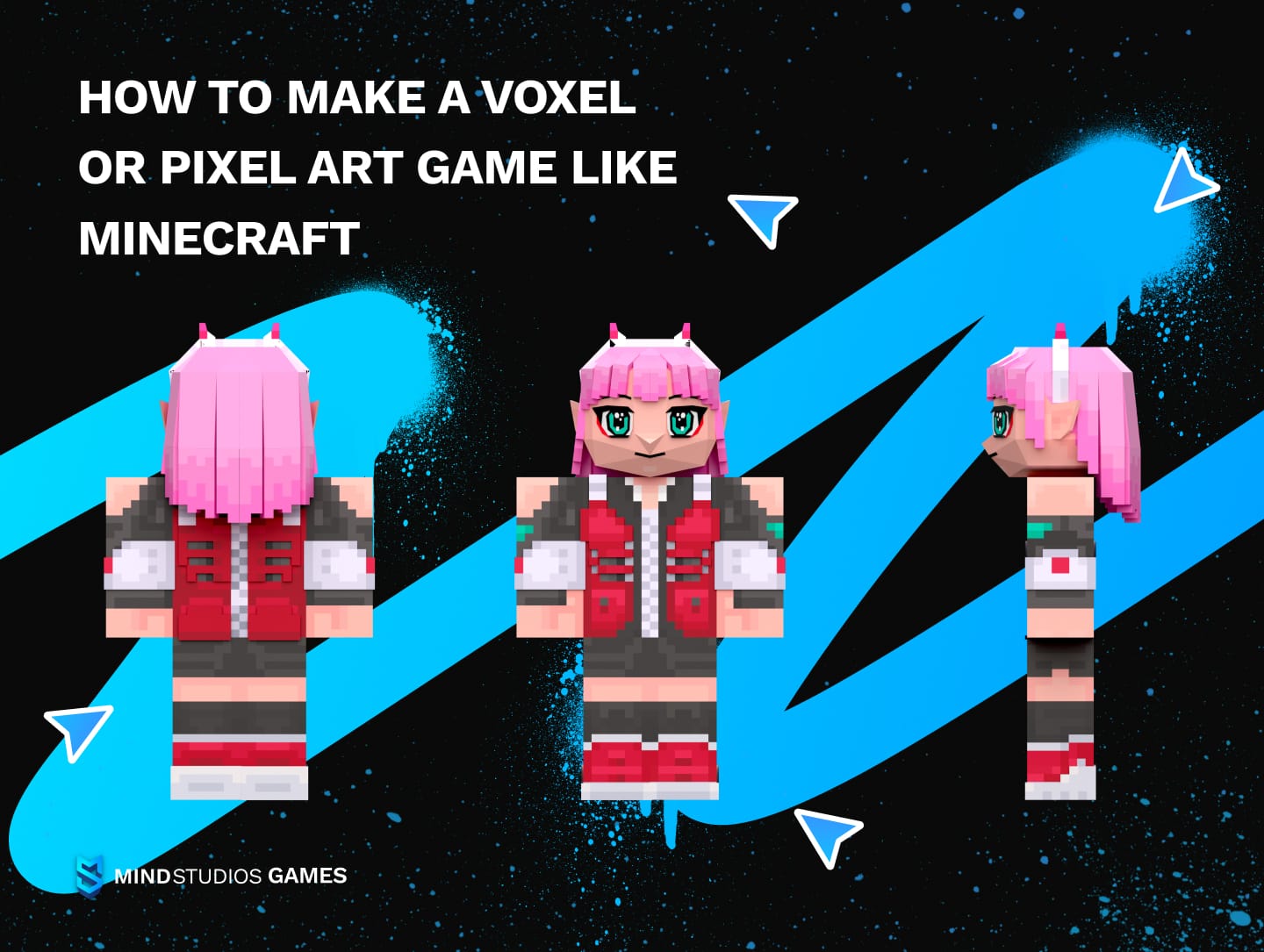
If you’re one of those eager to learn how to make a game like Minecraft, this guide is for you. We’ll cover the basics and offer some insights from an experienced pixel/voxel artists and game developers.
Highlights:
- Minecraft is a case study for how to make a viral game with limited resources;
- Nostalgia trends are bringing back the popularity of pixel and voxel visuals;
- Sandbox games are a perfect answer to the global demand for customization and personalization.
Minecraft has been around for over 15 years now — consistently popular, but in a quiet way, often just a little in the shade of other, more hyped games. However, sandbox games have seen a spike in popularity lately, and retro-style pixel and voxel graphics are all the rage in this age of nostalgia, it seems. So a lot of game developers are thinking about diving into this pool that seems to offer long and profitable life for games.
Goal-setting is all good and well, of course, but you need more than just “voxel sandbox” concept to really stand out and stay relevant. Minecraft did a lot of things right to be where it is. So let’s go over them, to really understand how to make your own Minecraft game that survives and thrives on the market.
This article will cover some tools and techniques you can use for the best results, as well as the workflow we at Mind Studios Games employ in development to be effective. And if you’re looking for a partner with experience in pixel and voxel art and/or for any other part of your game development, reach out to us — we offer a variety of services, including full-cycle and co-development.
What are pixel and voxel games?
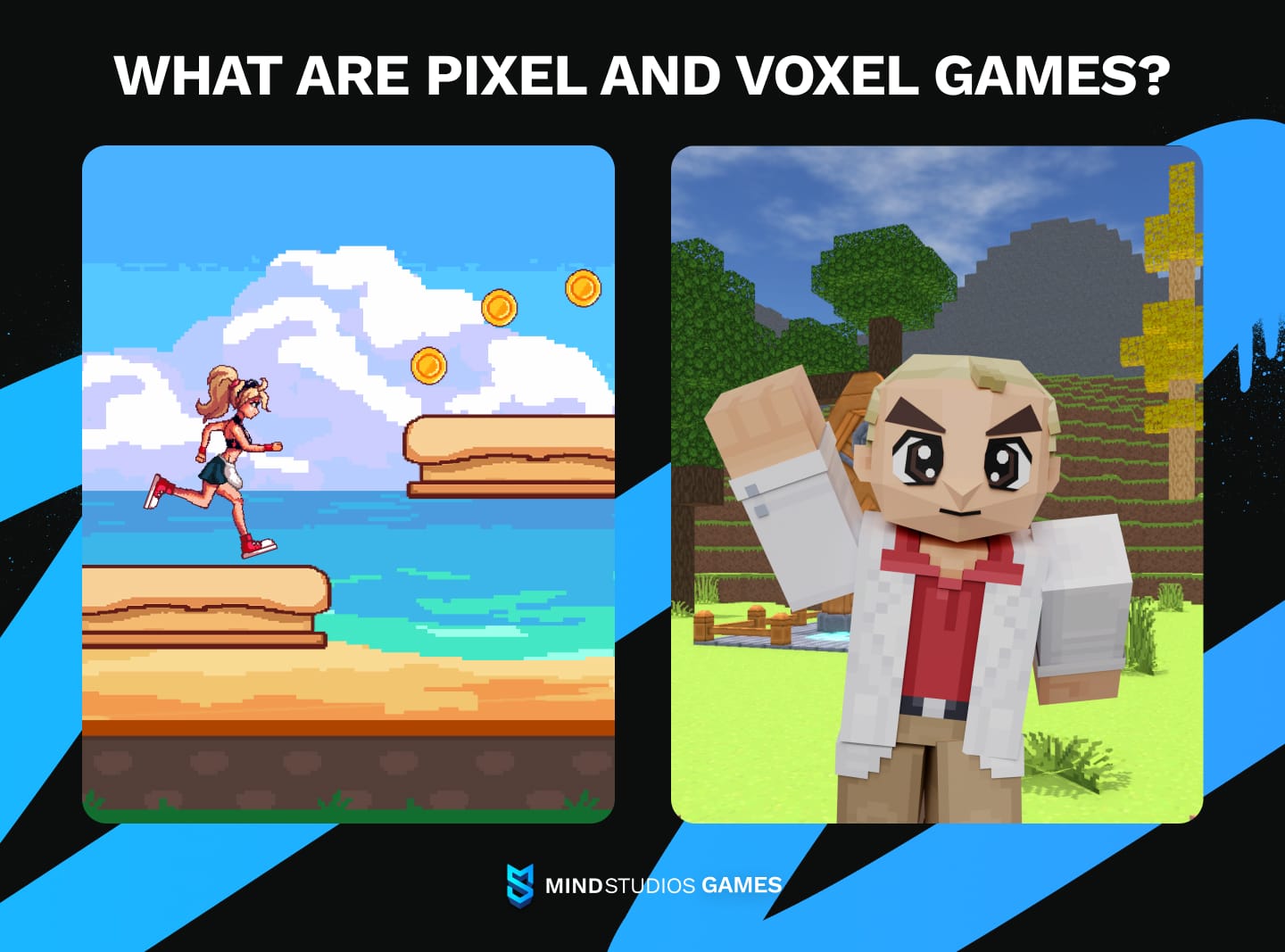
Having landed on this page, you probably know what pixel and voxel art is. But just in case, here’s a short explanation for those who are new to the topic.
We’re all used to polygonal 3D art and high-resolution texture painting, which aim for photorealism or detailed stylization through complex geometry and advanced lighting. Compared to that, pixel and voxel art emphasize abstraction and clarity. They trade fine detail for strong silhouettes and visual coherence at small scales.
Pixel art is a 2D raster graphics technique where images are created and edited at the pixel level. Artists deliberately work within low resolutions and limited color palettes, which requires precise placement of each pixel to convey detail, motion, and shading. This method emerged from technical limitations of early game consoles and computers, but today it is used stylistically to evoke nostalgia and highlight design clarity.
Voxel art, in its turn, operates in 3D space, using volumetric pixels (basically, cubes) as the basic building blocks of models and environments. Each voxel contains color or material information, similar to how each pixel holds color in 2D. Voxel art simplifies modeling by allowing artists to "sculpt" with cubes rather than complex polygon meshes. This results in a distinctive, blocky aesthetic seen in games like Minecraft. It provides a playful, modular look. It can also be computationally efficient for certain rendering pipelines, although that is rarely the reason to make a voxel game.
Both pixel and voxel art use the limitations of isolated units to guide design, prioritizing style and nostalgia, rather than realistic detail. This makes them powerful artistic choices, especially for stylized or retro-inspired games.
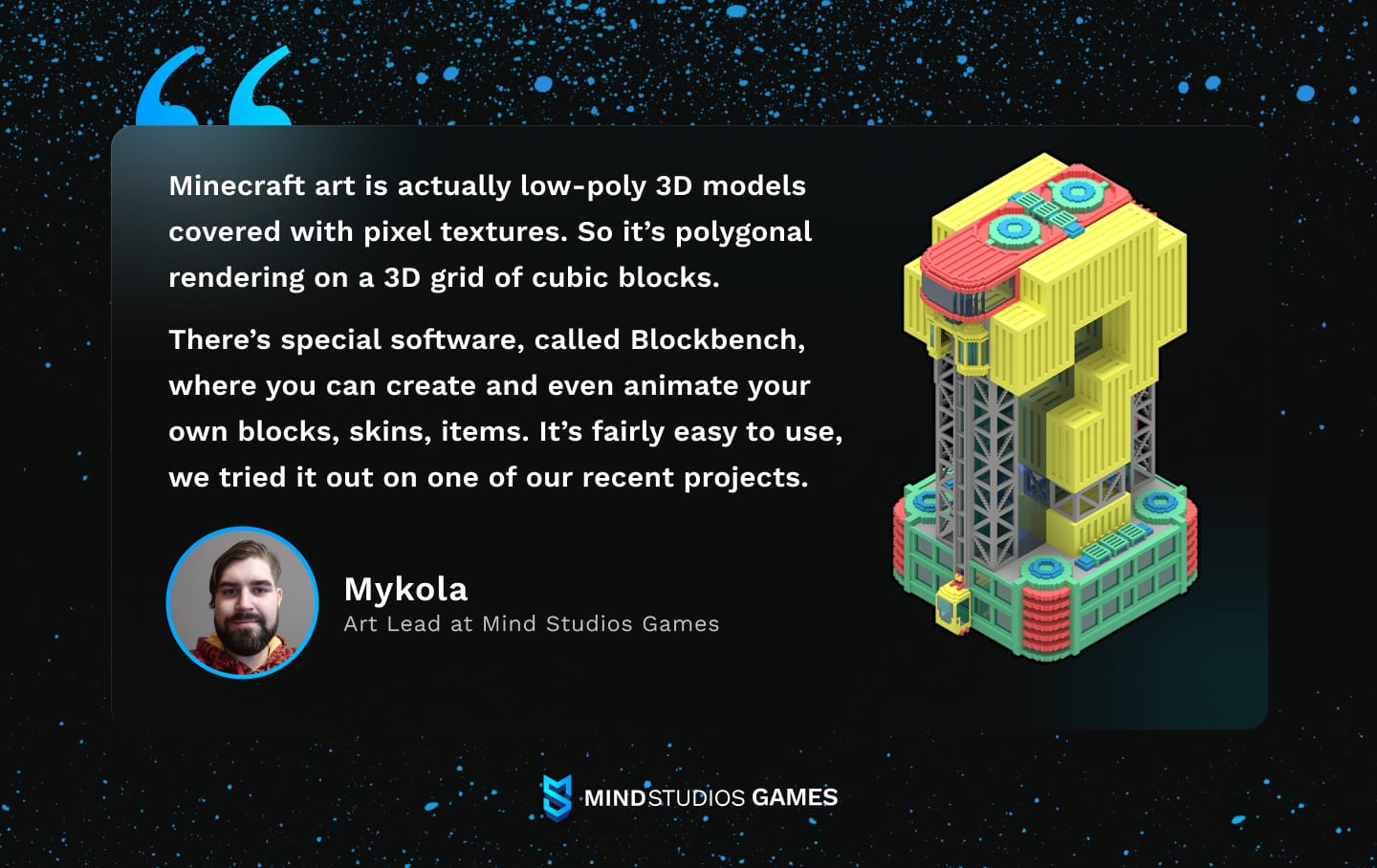
By the way, did you know that Minecraft itself actually doesn’t use voxel rendering?
Choosing the right game engine
If you’re looking for a team to build a Minecraft game of your own, one of the questions to answer is what game engine you need. Minecraft uses a custom game engine, in a way — the game was coded from scratch, not relying on a specific engine. However, today, only the biggest game development companies tend to build their titles that way. It’s just not practical — expensive and time-consuming.
The three most popular game engines everyone knows of are Unity, Unreal Engine, and Godot. There are other, smaller, services, but we’ll cover these three as the most likely to be used if you outsource your game’s development.
Voxel and pixel art games often have unique needs, like specialized rendering pipelines, low-poly assets, grid-based logic, sometimes large procedurally generated worlds, etc. In view of that, let us offer a comparison of the three engines for pixel/voxel games.
Engine |
Pros |
Cons |
|---|---|---|
Unity |
|
|
Unreal Engine |
|
|
Godot |
|
|
Overall, we believe Unreal Engine is, in most cases, too much for pixel and voxel games. The engine is built upon the concept of highly realistic graphics, has a learning curve, and is pricey.
If we had to recommend a game engine to anyone looking up how to make a game like Minecraft, we’d go for Unity in most cases, thanks to its extensive list of tools and huge community. And if you’re making a very small-scale 2D pixel game or have budget constraints, Godot is a decent alternative.
Core features and game mechanics to implement
First things first — obviously, Minecraft-like sandbox titles aren’t the only type of games you can make in voxel style. We at Mind Studios games have in our portfolio a voxel city management game, for example. Same as pixel games and games in other visual styles, you’re not limited in ideas with voxels either.
However, for the sake of this particular article, feature-wise, we’ll be focusing on how to make your own Minecraft game, specifically.
And without further ado, let’s go.
Infinite or procedurally generated worlds
One of the most defining and revolutionary features of games like Minecraft is the procedurally generated world — a theoretically infinite landscape, built on the fly as the player explores. This mechanic reshaped what sandbox games could be and why they remain endlessly engaging.
A procedurally generated world means that every player’s experience is unique, which taps into the players’ curiosity and offers the joy of exploration. An endless map keeps players returning, even after hundreds of hours
How to make it even better: Dynamic lighting, shadows, and a shifting day-night cycle add realism and depth to the gameplay.
Block placement and destruction
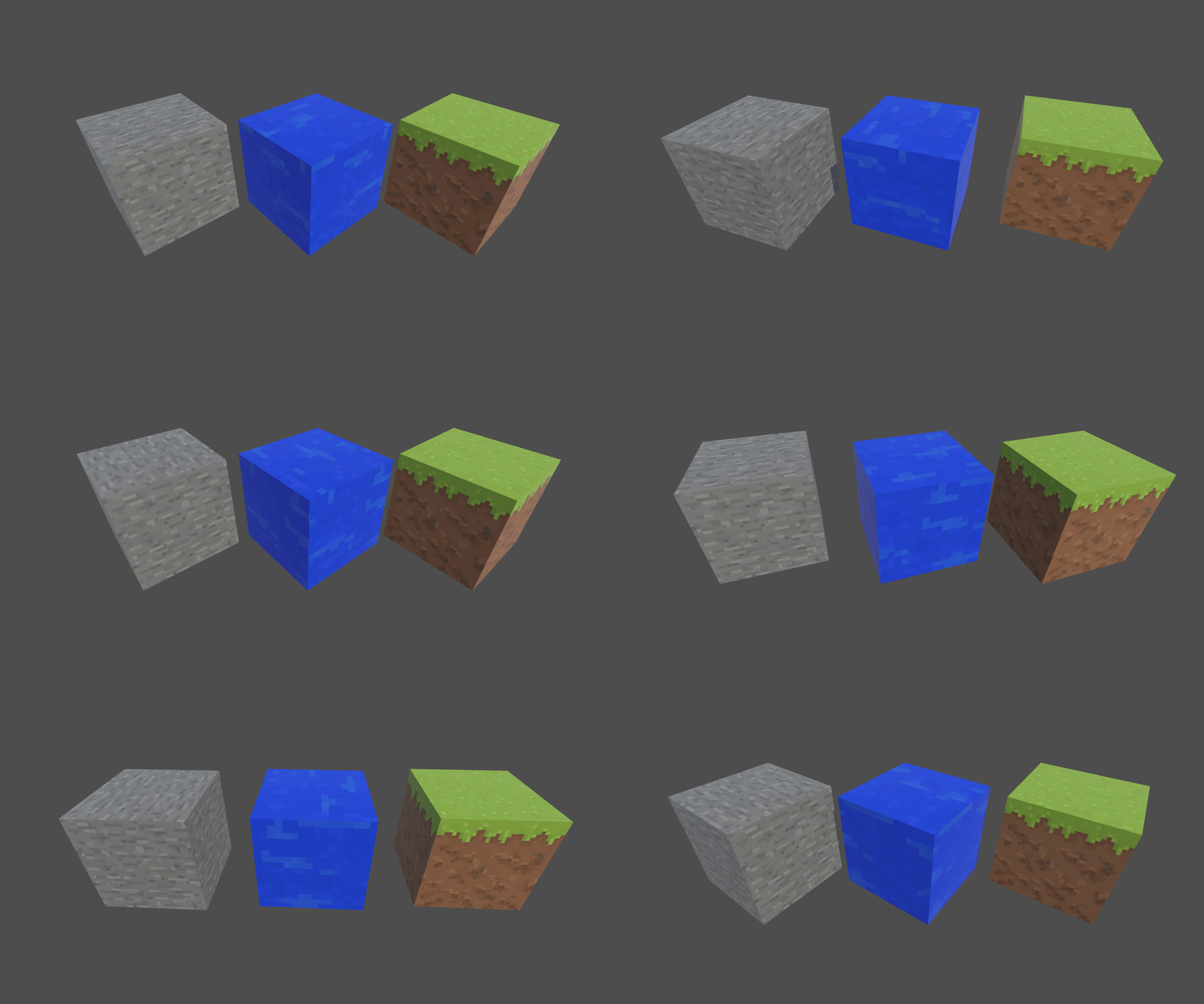
The foundation of Minecraft-like games is built upon the idea of breaking the world down into blocks (cubes) and then placing them back in new ways. Players can mine stone, chop wood, or dig soil, and then reuse those materials to construct buildings, landscapes, or even functional machines. This creates a strong sense of control and ownership over the game world.
How to make it even better: Basic physics — gravity, fluid dynamics (water/lava flow), environmental reactions (fire spread, explosions) — create a more engaging and believable world. Optional game mechanics like weight, stability, or collapsible structures can also add realism, challenge, and unique problem-solving opportunities.
Inventory and item management
Players usually carry what they collect in a personal inventory. Managing space, choosing which resources to keep, and organizing items are all part of the challenge. This adds a layer of strategy: players must balance exploration with preparation.
Crafting systems
Instead of just giving players pre-made objects, allow them to combine raw materials to create new items. For example, wood and stone can become tools; iron can be smelted into weapons or armor. Crafting turns resource gathering into reaching for new accomplishments and keeps players striving for the next upgrade.
How to make it even better: Redstone-like logic systems (in-game circuits, switches, power mechanics, etc.) let players build machines, traps, or automated systems, encouraging creativity and replayability.
Survival mechanics vs creative/free-play mode
Many voxel sandbox games offer two different experiences, although it is, of course, possible to offer only one of them. In survival mode, players must manage health, hunger, and danger from enemies — this mode is all about tension and long-term goals. Enemies, neutral mobs, and passive wildlife provide challenges, resources, and ecosystem diversity.
In creative mode, on the other hand, those restrictions are lifted, giving players unlimited resources and freedom to focus purely on creativity and letting their imagination fly.
Progression and achievement systems
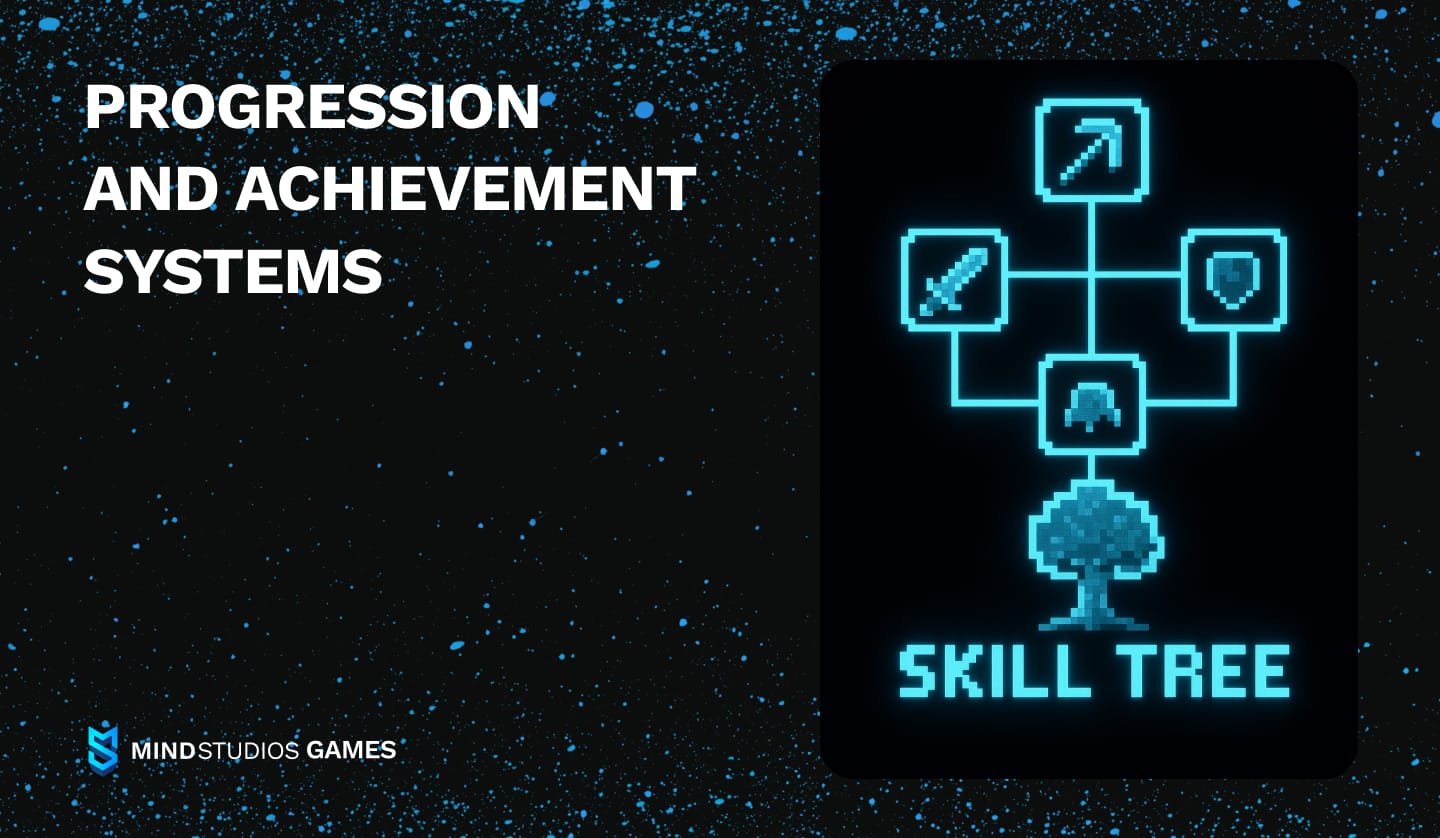
To be clear, if you decide to make voxel art game specifically following in Minecraft’s steps — meaning, a sandbox game — it’s essential for you to understand that this type of games is built upon a concept of “no goals set in stone”. Sandbox games do not limit players with any kind of mandatory achievements, that’s their key aspect. That doesn’t mean, however, that you can’t add goals at all.
Skill trees, unlockable recipes, or achievements that encourage exploration, experimentation, and mastery are fair game. In fact, progression mechanics give players motivation to actually play: the sense of advancement creates a rewarding gameplay loop that keeps players invested beyond the early stages. You just need to carefully craft such quests so that they don’t become shackles instead. For example, don’t set any quests as prerequisites to open new locations.
Multiplayer, modding, and extensibility
Multiplayer expands the game into a shared creative and survival space. In any type of games, features like chat, collaborative building, trading, and PvP enhance social engagement. Games like Minecraft are no exceptions. Community-driven servers can become hubs of creativity, competition, or role-playing, extending replayability dramatically.
So what can we recommend in this direction? Here are just some popular options of networking solutions.
Solution |
Brief description |
|---|---|
Photon |
A popular cloud-based network service that simplifies multiplayer setup. It helps manage connections, data syncing, and matchmaking without needing you to build all that from scratch. |
Netcode |
Built into game engines like Unity, it provides tools to manage multiplayer interactions locally or online. With Unity our game engine of choice, we use Unity's Netcode for GameObjects. |
Custom networking |
You can also build your own system, but that’s more complex and requires hiring a skilled backend developer. |
Mods and custom maps
Mods are user-created modifications: new blocks, tools, or game rules. Supporting mods means designing your game in a way to allow players to add or change content, often by allowing custom files, scripts, or assets to be loaded into the game.
Similarly, supporting custom maps means players can create their own worlds or levels, then share them with others. To do this, you typically provide tools or an easy way for players to import, export, and share their creations.
Unity has a large community, extensive tools, and good support for modding — features that helped it become widely used for voxel games.
If you need an example tech stack for this functionality, we can offer a sample 👇🏻
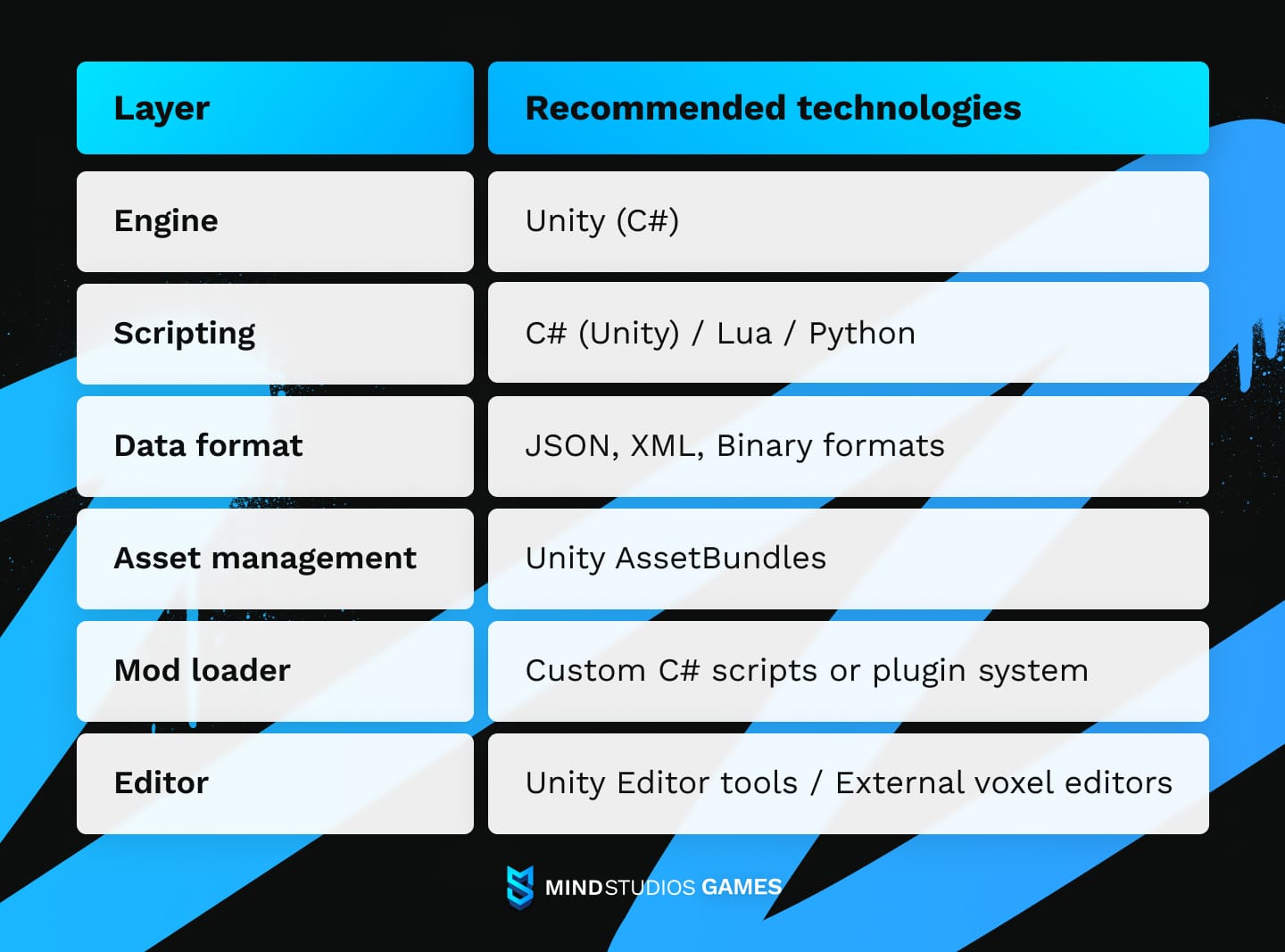
In a nutshell, a perfect sandbox system is a flexible environment where players can freely build, modify, or experiment. To support this, your game should:
- Allow easy placement/removal of blocks or objects.
- Support saving/loading custom worlds.
- Provide tools or APIs so players or modders can create new content or game mechanics.
- Ensure the game engine can handle dynamic changes without crashing.
Real-life examples
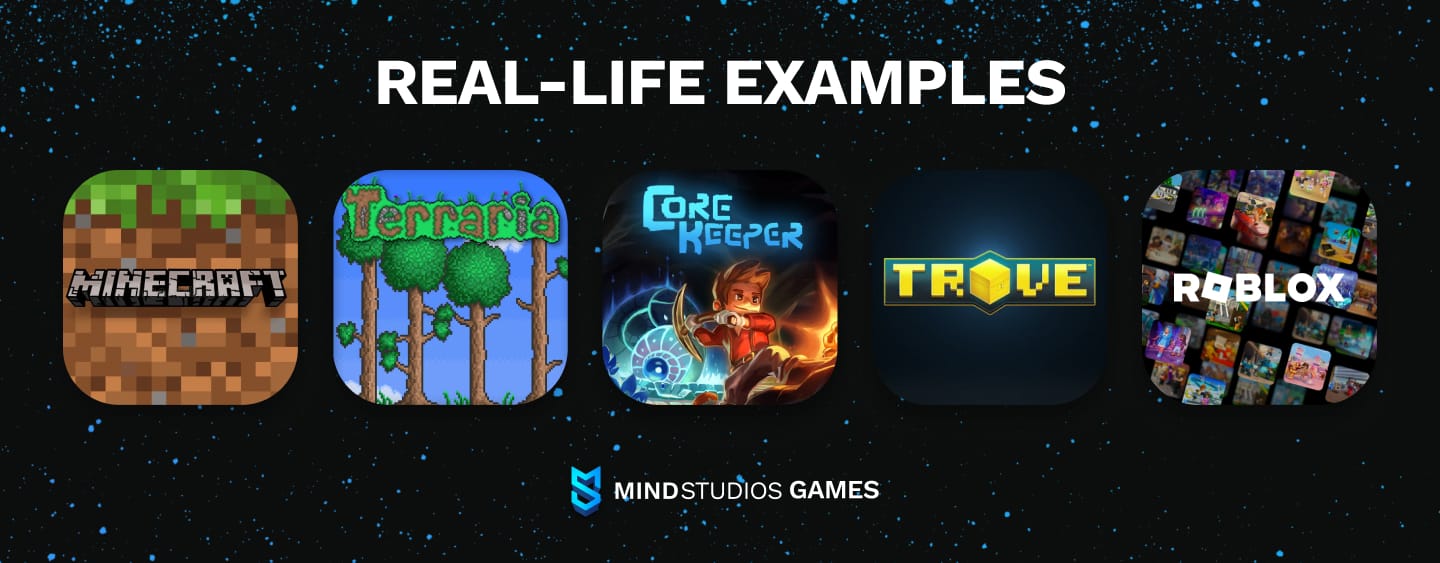
Now, if you’re planning to make voxel art games — or pixel ones, for that matter — you need to look at successful examples. Although the most well-known, Minecraft is only one of the crowd.
Minecraft
Launched in 2009 by Markus Persson, better known as Notch, Minecraft began as a modest indie project centered around simple, block-based graphics and open-ended gameplay. Its core mechanic — placing and breaking blocks to create and explore vast worlds — resonated deeply with players worldwide.
The game’s flexibility was what encouraged a vibrant community that developed countless mods, custom maps, and plugins, significantly expanding its content and appeal. This community-driven growth helped propel Minecraft into one of the best-selling and most influential games of all time, with a massive global player base and a thriving ecosystem of user creations.
Terraria
Terraria shares many similarities with Minecraft’s sandbox spirit, but it’s an example of a 2D pixel art style game. Released in 2011, it emphasizes exploration, crafting, and combat within procedurally generated worlds. Its pixel art aesthetic has fostered a dedicated community that continuously develops mods, custom worlds, and new gameplay modes. The game's open-ended nature and active community have contributed to its long-lasting popularity.
Core Keeper
Core Keeper is a pixel sandbox adventure game that blends survival, exploration, and crafting. In a world set in a cavern underground, players are to uncover ancient secrets of a mysterious core at the center of the said cavern. To survive, they mine resources, grow food, craft tools, and battle creatures.
The reasons why this game is popular are its cozy atmosphere and well-thought-out progression loop: gathering materials unlocks better gear, expanding bases offers farms and machinery, and taking on bosses opens up new areas.
Trove
Trove is a voxel-based MMORPG that combines sandbox building with multiplayer adventure. Players can create and customize worlds, explore dungeons, and collaborate with others. Its emphasis on community content like user-generated worlds and shared assets has helped maintain an engaged player base. Regular updates and social features bolster its success as a vibrant voxel universe.
Roblox
More than just a game, Roblox functions as a platform that enables users to create and publish their own 3D worlds and games using simple building tools. Many of these creations resemble voxel or pixel-style environments. Roblox’s greatest strength is its community of creators, which has led to an endless variety of user-generated content. Its accessibility and social features have made it a giant in the sandbox genre, with millions of active players worldwide.
Conclusion
Minecraft’s rise shows how a simple, accessible sandbox concept can grow into a global phenomenon when coupled with a passionate community and user-generated content. Titles like Terraria, Trove, and Roblox foster creativity, exploration, and community engagement. These games empower players to build, modify, and share their worlds, which is key to creating enduring success in the sandbox genre.
Today’s players crave that empowerment. And isn’t that the surest and most straightforward road to success? Follow what players want — and you’ll catch their attention. Do it well, and you’ll have their continuous engagement and loyalty.
Whether you’d like to know how to make a pixel art game or a voxel one, have questions about Minecraft platform design, or already have a defined idea and are looking for a team to jump in and start bringing it to life — try us! Mind Studios Games has top-notch pixel and voxel artists (check our voxel art on our ArtStation page!), and we’re skilled in a variety of genres and types of games. Be it sandbox or some other voxel game idea, bring it on!
If you’re interested, get in touch with us here on our website, or via our Head of GameDev’s LinkedIn page. We’ll be looking forward to hearing from you.