
 ChatGPT
 Perplexity

Explore how gamification in sports unlocks deeper engagement; learn why gamified fitness platforms are rising and how to apply game design in sports.
Key takeaways:
- Sports take wisdom from games, and have been doing so for a while
- Research shows that gamifying physical exercise helps build consistency
- Adding game-like narrative to a training assistant game can boost motivation
What is gamification — and how does it apply to sports?
Well, at its core, gamification in sports means applying game design principles — points, challenges, progression — to athletic contexts. It’s nothing new, we’ve already seen it multiple times in training and fitness apps, wearable integrations, team sports, and more.
Sport gamification has become central to the fitness-tech ecosystem. The fitness sector is incorporating gamified feedback loops, borrowing what makes games engaging and using it to enhance motivation, retention, and performance. It’s just getting to a new level now.
At Mind Studios Games, we are in a pretty unique position as a game development company with experience and insights into gamifying non-gaming apps, since we’re part of a non-gaming software development studio. This allows us to see how blurred the lines between gamified apps and games are and to understand that a game can be just as effective for training.
For example, we have a partner developing a game that promotes walking. We’re not at leisure to discuss the details at this time, but it’s ingenious, to be honest. We believe that the future of sports lies in games like that — in merging training with playing. Because what can motivate people better than having fun?
So if you’re looking for a partner who will meet your training game idea with enthusiasm yet will offer experience to make it actually work as a sports assistance tool, take a chance on us. Get in touch with our Head of Gamedev Ivan Dyshuk, or leave your inquiry in our contact form, and we’ll get back to you in a jiffy to talk it out.
Gamification in sports: Quick overview
At its simplest, sport gamification means enhancing physical activities with game-like systems that make progress measurable, rewarding, and engaging. Here is a very short overview of 7 most common game design principles used in gamification for athletes, from wearables to mobile fitness platforms.
| Game element | Description |
|---|---|
| Scores | Reward actions (e.g., steps, reps, matches). |
| Levels | Visual markers of progression. |
| Achievement badges | Milestone recognition. |
| Progress tracking | Real-time stats, charts, history. |
| Quests | Structured tasks with goals. |
| Rankings | Sparks healthy competition, promotes social engagement. |
| Unlockables | New features or content as incentives. |
These mechanics form the building blocks of motivational training games and gamified sports app development.
Game design mechanics used in sports context
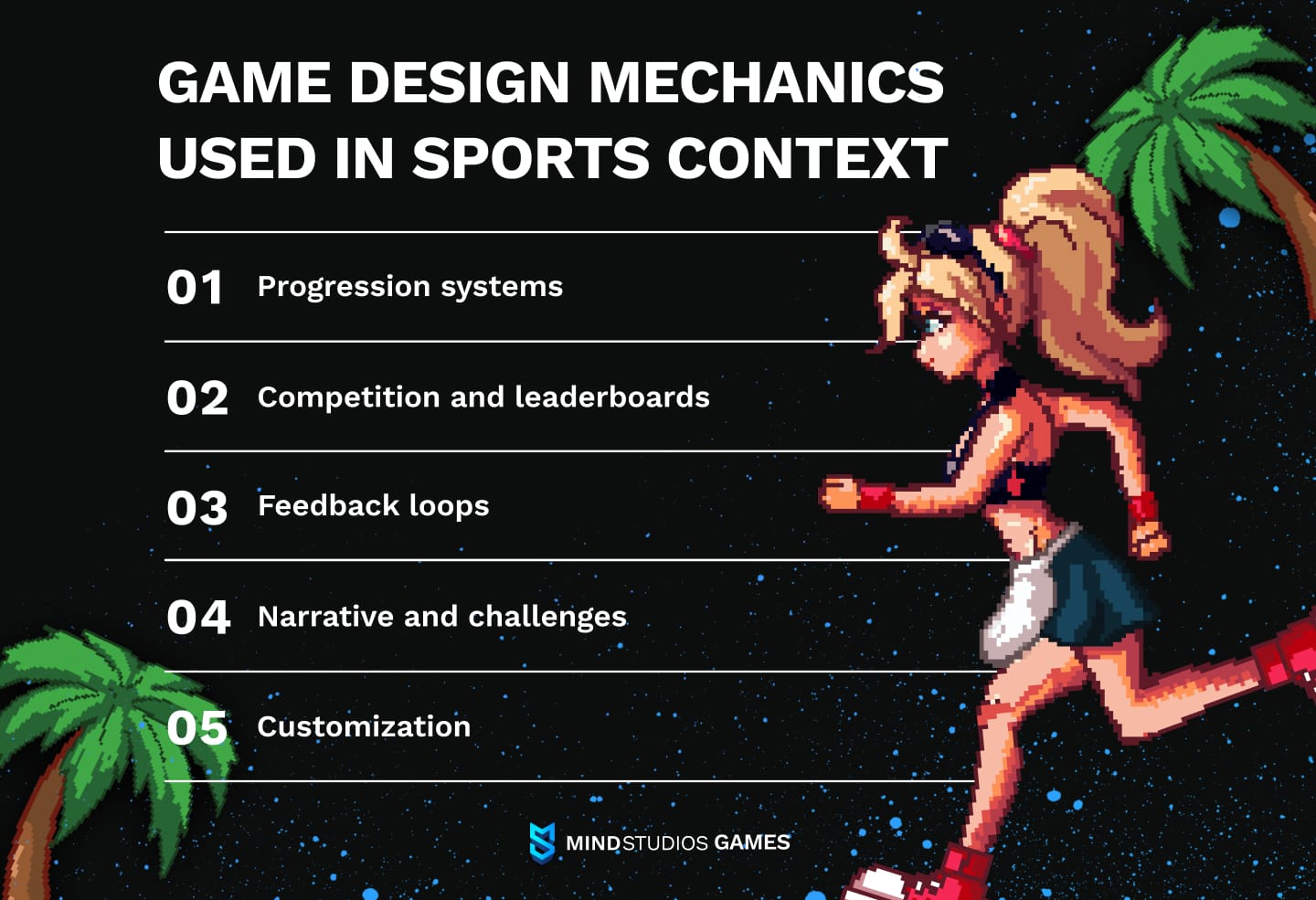
Now let’s get to a more detailed look into how to use games for sports training. The following mechanics have become foundational in creating immersive sports tech gamification experiences, as well as sports games that engage users beyond raw performance metrics.
Progression systems: From skill trees to unlockables
Progression is the heartbeat of any good game, and it works just as powerfully in sports. In game development, progression systems let players unlock abilities, levels, or storylines as they improve. In sports, similar mechanics can represent an athlete’s growth over time.
Here’s an example: You can visualize endurance, speed, and consistency as players’ skill bars that fill with every workout. This turns intangible improvement into something visible and emotionally satisfying.
Unlockables, on the other hand, deepen the effect by offering new features or rewards once specific goals are met. For instance, completing a 10K training challenge might unlock advanced routines or personalized coaching content. These tangible rewards not only acknowledge effort but also guide users toward the next achievable milestone while keeping the training loop continuous and rewarding.
Competition and leaderboards: Fueling motivation through social dynamics
Human beings are naturally competitive, and in sports, that drive is central. Digital leaderboards harness this instinct by allowing users to compare performance. It could be against global athletes for professionals or a small circle of friends for those who train leisurely.
In sports engagement apps, competition doesn’t always mean rivalry; it’s often about community. Seeing a friend climb the rankings can push others to stay consistent without feeling isolated.
Tip: The most effective leaderboard systems in sports games don’t glorify only the top few. They recognize diverse forms of achievement: consistency, improvement, or personal bests. By rewarding not just “who’s best” but “who’s improving,” developers can cultivate motivation across varying skill levels. This inclusive design philosophy helps avoid burnout and promotes long-term engagement.
Feedback loops: Real-time metrics that drive performance
Feedback is what keeps us aware, informed, and motivated. In games, feedback loops come in the form of visual effects, sound cues, or score updates and inform players of success or failure instantly. In athletic contexts, game-based training tools can use biometric and performance data to achieve the same.
You can turn notifications into game-like fun ones. Here’s an idea off the top of my head:
- Cheers for distance covered
- Sound associated with danger when heart rate goes too high for a sustained period
- Separate sounds for when energy zones change
They will provide athletes with constant awareness of how they’re doing — and in a non-boring way.
Another way is to use digital rewards like badges or micro-achievements players see when they take a break. They function as quick reinforcement for effort, turning repetition into satisfying progress.
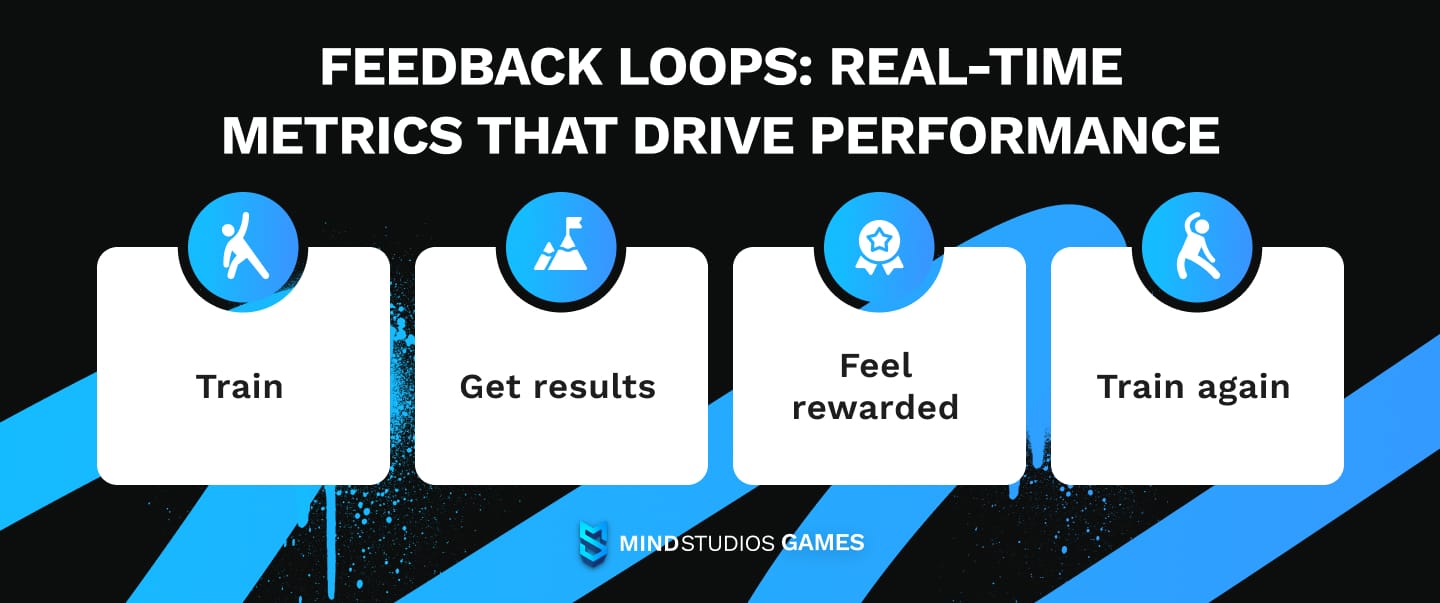
The best systems mix quantitative data with emotional affirmation, ensuring users not only see their improvement but feel it. When well-designed, feedback loops create a psychological rhythm:
Train → Get results → Feel rewarded → Train again
Narrative and challenges: Turning training into story-driven experiences
Storytelling seems distant from sports, doesn’t it? You might be surprised to learn, however, that narrative framing can transform the way athletes experience training.
Instead of repetitive workouts, let them embark on story-driven “quests” like those in game campaigns — progressing through chapters or missions as they meet milestones. This approach adds meaning and direction to each session.
For example, a motivational training game could present a runner’s journey as exploring new “regions” based on kilometers covered. With the location of their first run as the starting point, miles covered training over time virtually bring them to neighboring cities first, then countries, then all across the globe. Go wild and encourage them to reach the Moon 😁
Beyond motivation, narrative design builds emotional connection — players feel part of something larger than data points and progress charts.
Customization: Building ownership and identity
Customization taps into a core human desire for identity and autonomy. In gamified sports app development, offering options to personalize avatars, color themes, or training goals makes athletes feel more invested in the product. Even small choices, like naming a virtual coach or setting personal reward milestones, can meaningfully enhance engagement.
For apps integrating wearable gamification, customization extends to data visualization and notification styles. Allowing athletes to choose how they see their progress — in minimalist graphs, game-inspired meters, or motivational messages — ensures that every interaction feels personal. This sense of ownership strengthens emotional attachment, helping users establish habits and maintain motivation over time.
Why gamification works in sports
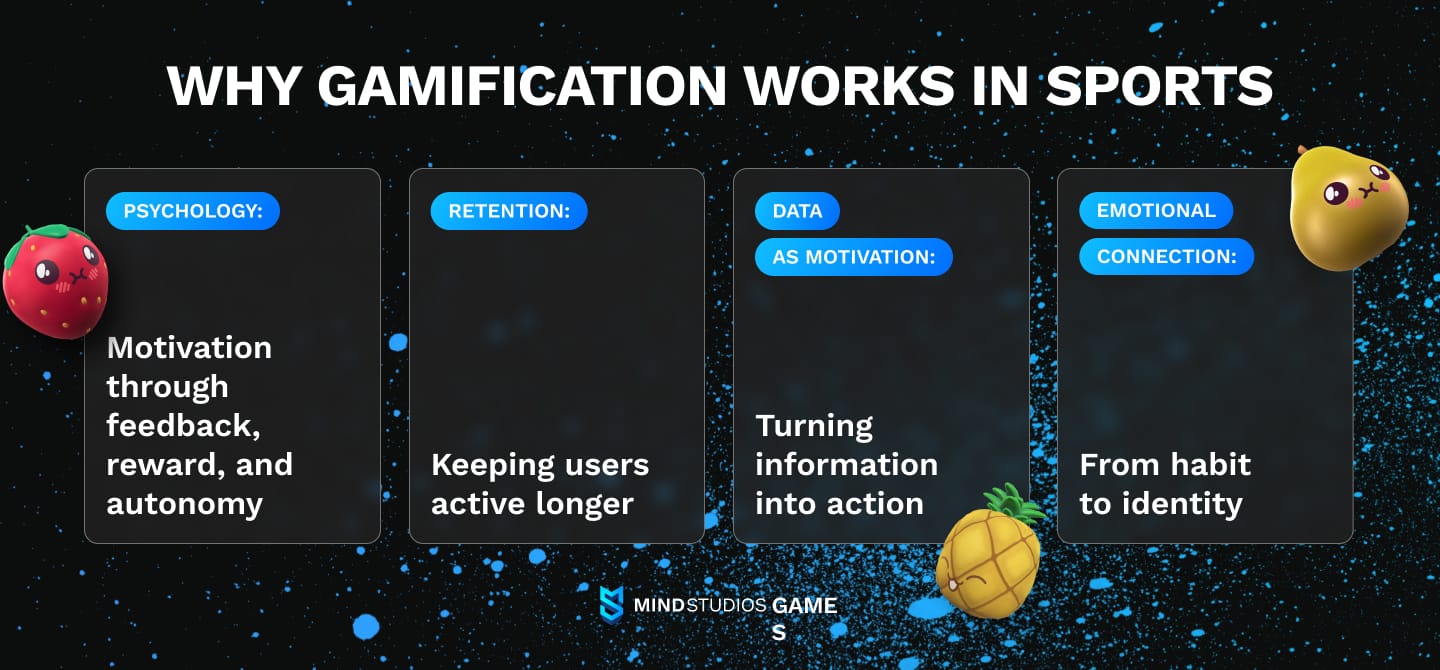
Humans are wired to stay motivated and learn through progress, feedback, and recognition. These principles can transform workouts into ongoing journeys rather than one-time efforts. Gamification isn’t just a design trend but a proven behavioral tool for sustaining athletic engagement and performance.
Psychology: Motivation through feedback, reward, and autonomy
Gamification connects directly to self-determination theory (SDT) — a psychological model that explains what drives personal motivation. According to SDT, people feel most motivated when three needs are met:
- Competence
- Autonomy
- Relatedness
Game mechanics satisfy these needs beautifully:
- Earning points or badges provides a clear sense of competence, as users can see tangible results from their actions.
- Customization features, from setting personal goals to adjusting interface themes, support autonomy by letting athletes feel in control of their experience.
- Leaderboards, team challenges, and community events foster relatedness, turning individual training into a social and supportive pursuit.
In other words, gamification for athletes works not because it’s about making things “fun” in a superficial way — it’s about designing experiences that feed real psychological needs. A runner who earns a badge for completing a weekly streak isn’t chasing pixels; they’re reinforcing a positive feedback loop tied to personal growth and identity.
On that note, you can also literally make them chase pixels — by creating a game where reaching a certain milestone (e.g., completing a 5K run in under 30 minutes) allows them to catch a thief who stole treasure from a castle. Now wouldn’t that be fun?
Retention: Keeping users active longer
One of the biggest challenges in fitness and sports technology is user retention. Many apps see a surge of enthusiasm when users first join, only for engagement to drop off within weeks. Gamification addresses this by turning fitness into a progression-based journey rather than a routine.
- Progress bars, streak counters, and milestones give users constant visibility into how far they’ve come and what’s next. This kind of feedback makes each session part of a larger story.
- Mechanics like challenges, time-limited events, and social sharing encourage repeat interaction, creating both accountability and anticipation.
- Add there a bit of narrative, and you invoke people’s natural curiosity that will make them continue using your app.
Mind Studios Games’ insight: From our experience in game-based design, retention doesn’t rely on constant rewards; it’s meaningful rewards that keep people going. The difference lies in emotional value: athletes stay because the system feels relevant, not because it showers them with points.
Data as motivation: Turning information into action
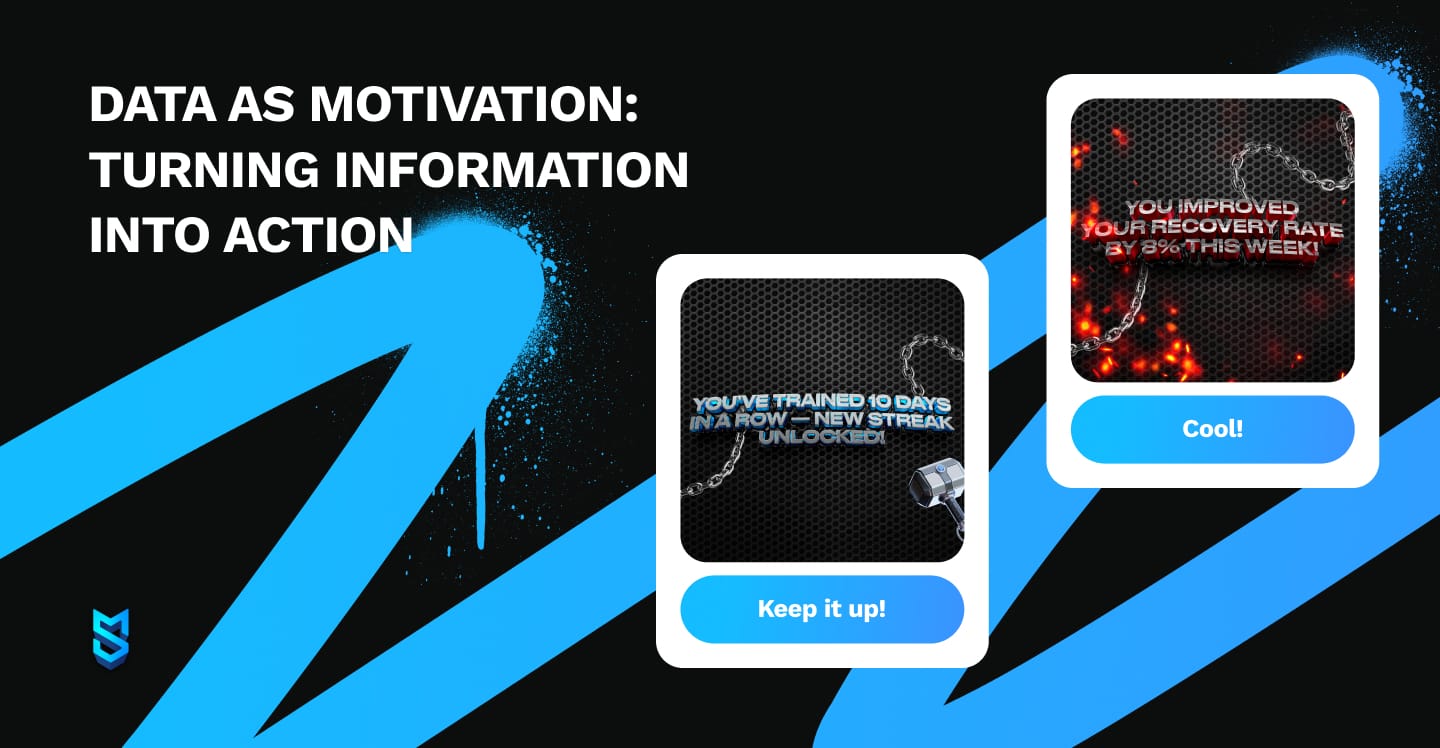
In modern tech, data collection is everywhere — wearables, sensors, smart clothing, and connected gyms track everything from pace to sleep cycles. But data alone isn’t motivating; it’s the interpretation that makes it powerful. Gamification transforms numbers into stories of progress.
By integrating sports tech gamification, data becomes part of the user’s narrative:
- “You improved your recovery rate by 8% this week!”
- “You’ve trained 10 days in a row — new streak unlocked!”
These moments create positive reinforcement and emotional satisfaction. They make the athlete feel seen and celebrated for their effort, not just recorded.
Furthermore, real-time feedback loops help users make immediate decisions — adjusting pace, hydration, or recovery strategies on the fly. Over time, this encourages mindful engagement with one’s performance data rather than passive consumption. The result is a shift from tracking performance to actively shaping it.
Emotional connection: From habit to identity
The ultimate success of gamification lies in its ability to turn external motivation into inner passion. When athletes engage with a gamified experience long enough, the behavior (training, practicing, improving) becomes part of their identity. They no longer run to earn points — they run because they see themselves as someone who trains regularly and grows through challenges.
This identity shift is the holy grail of habit-building for athletes. By using well-crafted game design, developers can facilitate this transformation naturally. Over time, digital rewards fade in importance as users internalize the value of the activity itself, leaving behind sustainable, long-term engagement.
Challenges of gamifying sports
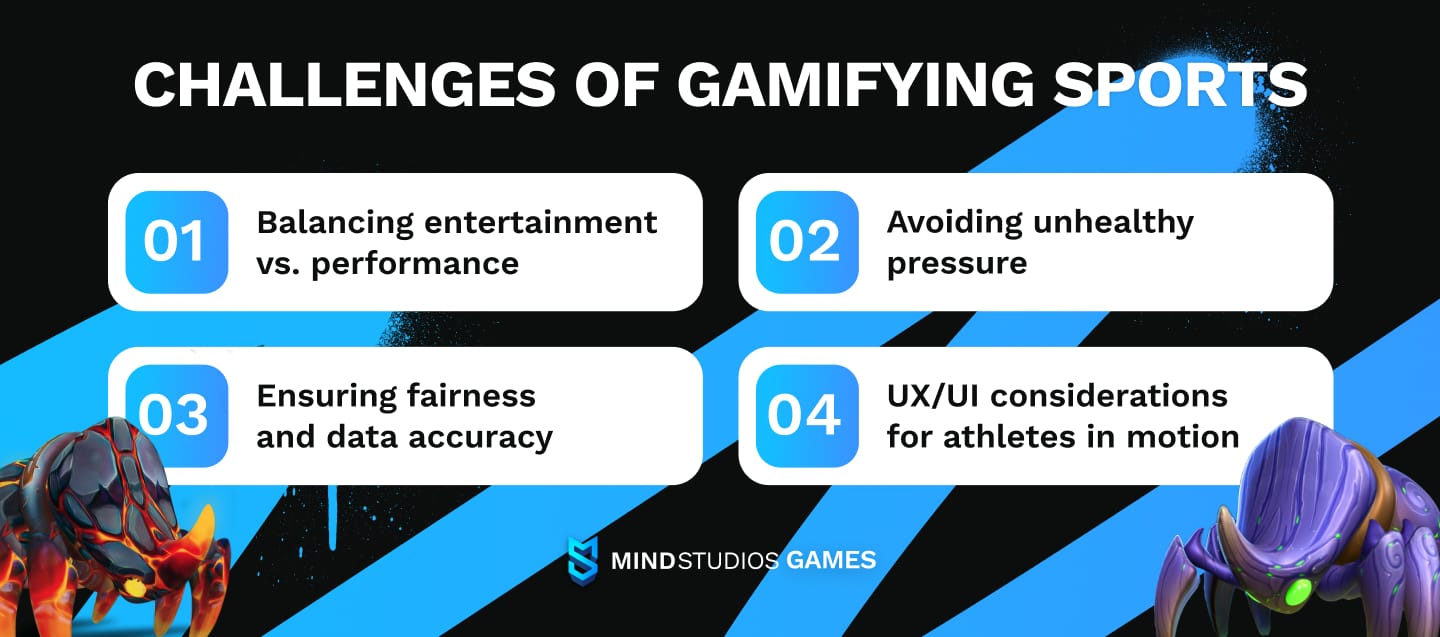
While gamification has proven its power to motivate and engage athletes, applying game design to sports isn’t without its pitfalls. Building an effective gamified sports app requires careful consideration of psychology, technical accuracy, and ethical responsibility. When done poorly, gamification risks trivializing athletic goals or even discouraging participation.
Below, we’ll explore the main challenges developers and designers face when merging sports and gaming principles — and how to address them strategically.
Balancing entertainment vs. performance
One of the core challenges in game design in sports is ensuring that the “fun” elements don’t overshadow the real athletic purpose.
If the experience becomes too focused on badges and points, users may chase short-term rewards instead of meaningful progress. This is particularly problematic for professional or semi-professional athletes, where performance data must remain accurate and actionable.
Solution:
A well-designed sports game mechanic should amplify an athlete’s sense of accomplishment, not redirect it toward superficial metrics. So, design systems where game elements enhance intrinsic motivation rather than replace it. For example, rewarding consistent training habits or correct technique execution reinforces healthy performance goals.
Avoiding unhealthy pressure
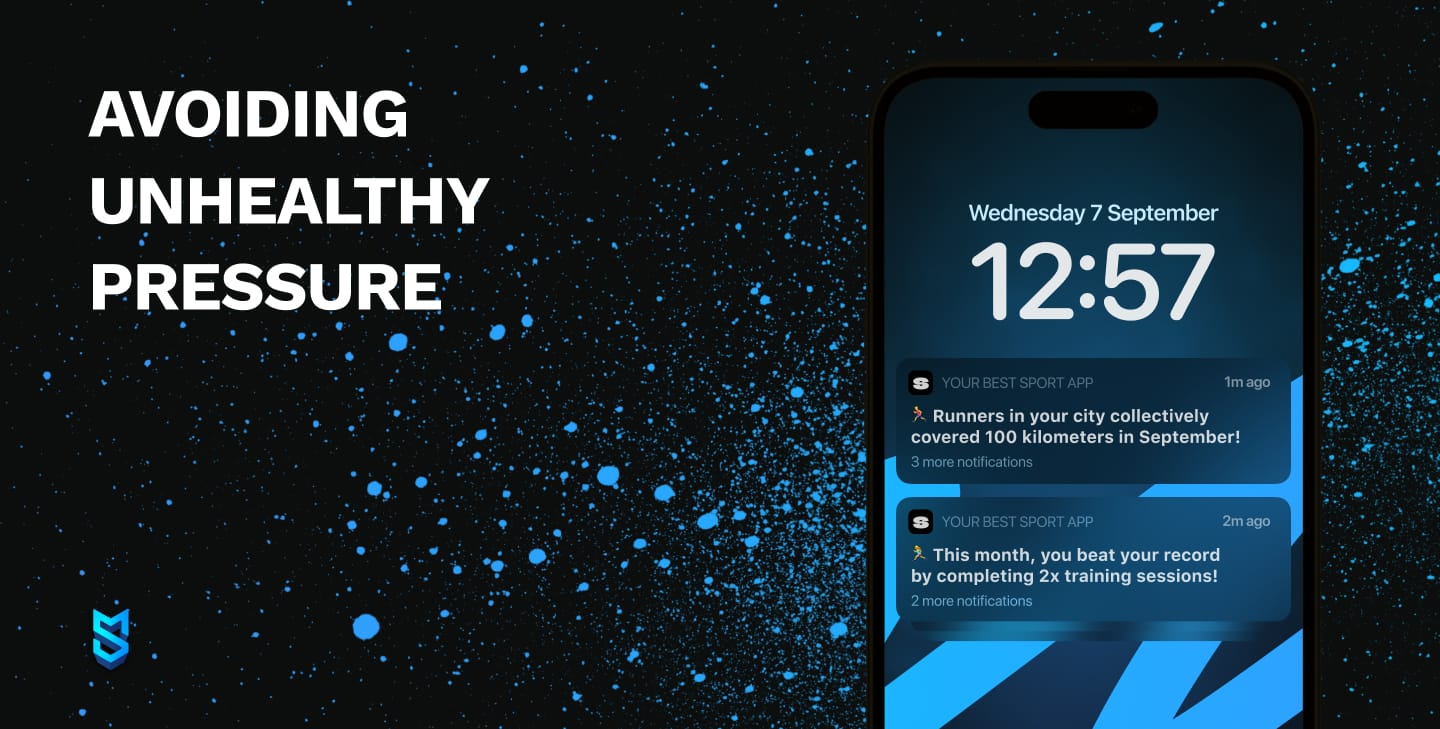
Competition can be a powerful motivator, but when it’s unbalanced, it can also create anxiety, burnout, or even lead users to push beyond safe physical limits. In a gamified environment, where progress is constantly measured and compared, the pressure to “keep up” can quickly shift from encouraging to stressful.
Solution:
One way to mitigate this is by focusing on positive competition and collaborative play:
- Features like team challenges, or shared milestones and goals, can foster community without creating toxic rivalries.
- Adaptive systems that compare users against their personal bests rather than global averages help maintain healthy motivation.
The other thing you can do is allow users to pause streaks, adjust targets, or take rest days without losing progress. Mindful prompts like “Great job — remember to recover!” can shift the tone from performance pressure to holistic growth. In this sense, gamification for athletes isn’t just about physical achievement; it’s about nurturing a sustainable, positive relationship with training.
Ensuring fairness and data accuracy
In sports, accurate data is everything. So a leaderboard or achievement is a gamified sports system loses credibility if users can cheat or if tracking devices provide inconsistent metrics. And wearable gamification depends heavily on precise integration between hardware and software.
Solution:
Developers must account for external variables such as signal drops, device calibration, or user manipulation. For example, a cycling app that misreads elevation data could unfairly reward some users over others. Regular validation, transparent algorithms, and clear communication with users about how scores are calculated help maintain trust and fairness.
Besides, as gamified ecosystems grow more sophisticated with AI-driven analytics and multi-device syncing, ensuring data reliability becomes not just a technical goal, but an ethical one. Accuracy preserves the integrity of the experience, fostering user confidence and long-term loyalty.
UX/UI considerations for athletes in motion
Designing for athletes means designing for motion. Unlike traditional gaming or productivity apps, sports users interact with devices during physical activity — while running, cycling, or lifting. That makes UX/UI design in gamified sports systems uniquely challenging.
Interfaces must deliver meaningful feedback at a glance, often under difficult lighting or physical conditions. Cluttered visuals, small buttons, or excessive notifications will more likely distract athletes and can even cause safety risks.
Solution:
The goal here is to create clarity and simplicity: information should be actionable in seconds. A wearable app might use color-coded visuals (green for target zone, red for overexertion), sounds, or haptic cues instead of text-heavy displays. Gamification elements like rewards or achievements should be visible after the activity, not during it, to avoid breaking focus.
Real-world case studies
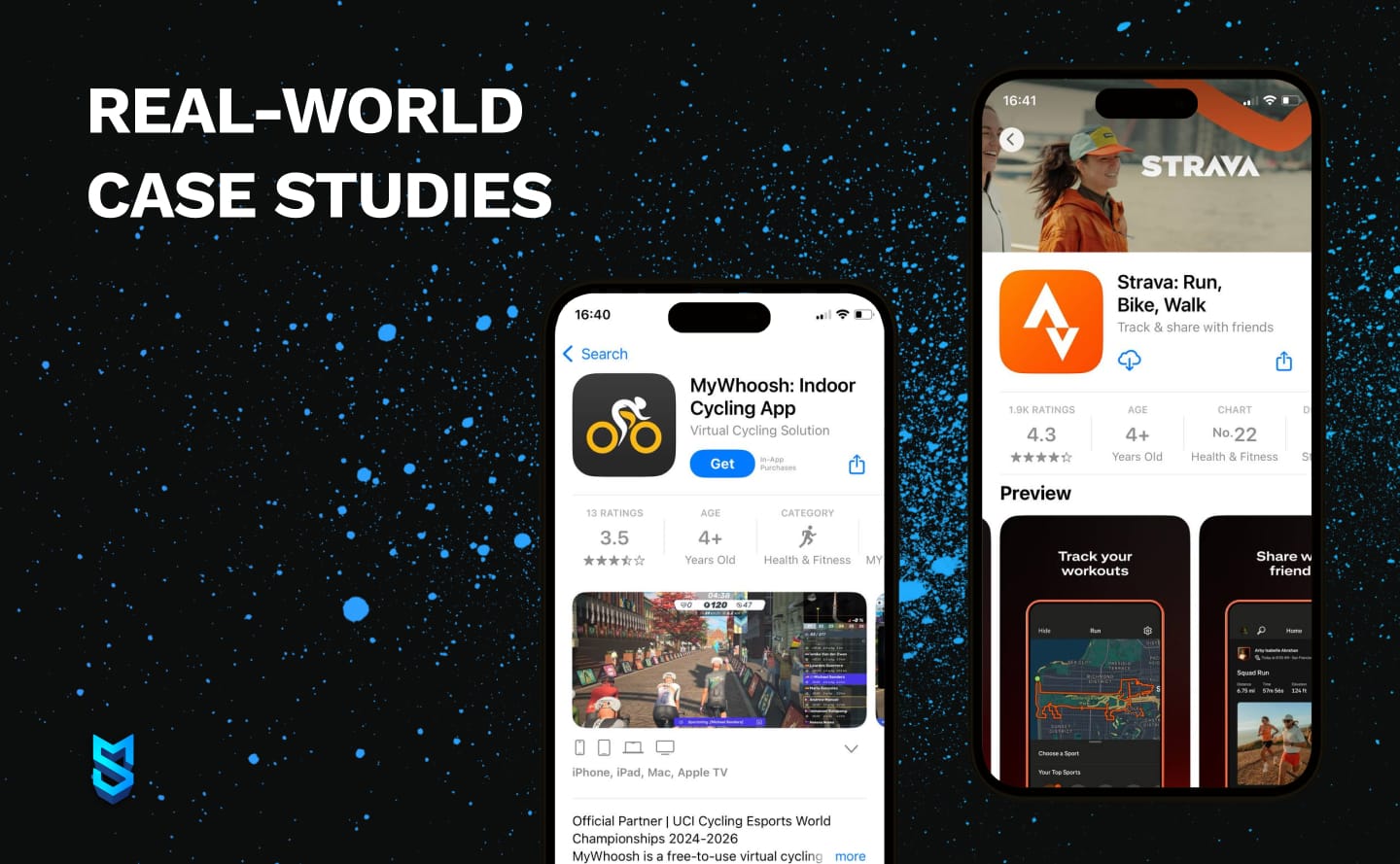
The rise of sports tech gamification has produced numerous platforms that successfully blend athletic performance, community engagement, and behavioral psychology.
Strava
Few platforms illustrate sport gamification better than Strava. Launched as a social network for runners and cyclists, Strava has evolved into a global ecosystem of community-driven competition and performance tracking.
Its gamified core rests on several interconnected mechanics:
- Segments and leaderboards. Users compete for the best time on specific routes, earning titles like “King” or “Queen of the Mountain.”
- Badges and achievements. Completing goals (like “100 km in a week”) unlocks virtual medals that signal progress.
- Social reinforcement. Friends can give “kudos” (likes), creating positive feedback loops similar to in-game rewards.
- Challenges and clubs. Group events, sponsored campaigns, and challenges foster both accountability and belonging.
What makes Strava especially effective is how it layers competition with community. The app satisfies both extrinsic motivation (public recognition) and intrinsic motivation (personal achievement). It has successfully transformed solitary workouts into shared experiences — motivating millions to keep moving not for rewards alone, but for connection.
MyWhoosh
MyWhoosh is the next generation of wearable gamification, where virtual environments merge with physical exertion. The platform offers a virtual cycling world that tracks riders’ metrics in real time while delivering immersive, competitive gameplay.
Its design cleverly integrates key sports game mechanics:
- Real-time racing. Users compete in synchronized global events that blend eSports and endurance training.
- Progression systems. Riders can level up, unlock new routes or bikes, and earn in-app currency through achievements.
- Dynamic feedback loops. On-screen performance stats (like cadence and power output) adjust instantly, keeping athletes aware of pacing and performance.
- Personalization. Customizable avatars and gear allow users to express individuality — a subtle but powerful motivator for retention.
What sets MyWhoosh apart is how it translates athletic progress into a visually stimulating, game-like world. The experience is neither pure fitness nor pure gaming; it’s an integrated feedback system that keeps users invested by blending performance realism with the excitement of virtual racing.
Mind Studios Games’ insight: MyWhoosh showcases how game-based training tools can go beyond tracking. When immersive visuals and responsive mechanics work together, the line between exercise and entertainment disappears, creating deeper emotional engagement.
Conclusion
Today’s sports engagement apps are more than just digital trackers; they’re ecosystems of motivation. Whether it’s through real-time leaderboards, adaptive challenges, or narrative-driven training arcs, gamified systems encourage consistency and emotional connection.
For game developers, the fusion of game design in sports is an opportunity to craft experiences that go beyond entertainment. It’s about designing tools that foster healthy habits, data-driven insight, and lasting motivation. The most successful products don’t just make athletes play more — they help them perform better, while enjoying every step of the process.
At Mind Studios Games, we believe in building digital products that inspire movement and growth. Whether you’re developing a new gamified fitness platform, enhancing wearable tech with interactive features, or exploring how to apply sports game mechanics to training, our team can help turn your vision into a motivating, user-centered experience.
Ready to bring your sports training game concept to life? Contact us to discuss your project or explore co-development opportunities with our experts in game-based design.